Wednesday, February 03, 2010

From GOP to Pop! Pow!


Winger talking heads and Boston Herald columnists alike are fairly soiling their Depend® diapers in squealing excitement. We're about to have a Republican U.S. Senator from here for the first time since Edward Brooke snuck away in a fusillade of allegations, personal and financial.

This Scott Brown is easy to ridicule. He was also nearly useless as a state senator. However, most obviously, on the surface, he is pretty in a two-pint beer goggles way and as my high-school chum Paula Delancey used to say, "Sometimes pretty is enough."

Of course, what gets the right panting is that he is at least a partial antidote to the GOP diseases. Effeteness is a chronic and bad one. Finally most Americans admitted that Republican politicians and the party were ineffective and out of ideas. In fact, most looked at the legacies of the Reagan and Bush 1 and 2 periods for the economic, diplomatic and policy disasters they were. We did want to be believe we could have guns and butter, we really did want to think that borrow-and-spend debt accumulation was somehow not taxation and national destruction. No matter how many times we click our heels or they sprinkle their elephant dust, those weren't, aren't and won't be true.

The party and wingers should, in fact, revel in this victory. In their glee that has been stifled so long and so often, they do extrapolate too far and wide though. That Brown's win came in the stereotypical liberal, Democratic Massachusetts is allegedly proof of the GOP's renewed mojo. This goes far beyond counting chickens before the eggs hatch. This victory is supposed to show that Americans are willing to forgive decades of GOP failures. As portent, many times too much rests on the jutting Play-Doh® chin of soon-to-be-Senator Brown.

Instead let us reflect on two key political and cultural issues:
  1. As Aasif Mandvi so cruelly and brilliantly portrayed it on the Daily Show (see 'possum symbol for the DNC and click the clip below), the GOP doesn't have to kill the Dems — "We're already dead." Congressional Dems have not pressed their agenda, much less forced it.
  2. Then in this commonwealth, there is in fact a political portent, but it almost certainly will not be massive Republican victories in 2010 and 2012 Massachusetts elections. Instead, it is past time to flush the DINOs out and end up with a real GOP here.
Depending on whether you count registered voters or actual ones, prima facie Republicans are under 16% of the electorate and about 10% of the legislature. Again at first glance, that seems very Democratic and undemocratic. Of course, a slim majority of voters are unenrolled in any party. They tend to vote for Dems most often, in no small part because typical Republican candidates are gormless and without a meaningful platform, and in many elections, no GOP pol is on the ballot.

More important, we have ended up with a large DINO base. While the rest of the nation looks at how the Dems outweigh the GOP in voter registration among that 49% of affiliated voters, they are badly deceived. For example, we almost always go for Dems for President, but trade off on our own governors by party. Many voters love the idea that if only the executive branch is a different party, somehow that's a magical check against political abuses. You may pause to laugh derisively now, but that has been a solid campaign strategy for the local GOP for decades here. Also, for legislative offices, when half-way decent Republicans run, they get like 40% to 49% of the vote. The tipping point on many races is within reach.

As we are seeing though, they could actually have a platform and candidates. For the commonwealth, it is probably more significant that 2010 GOP gubernatorial candidate Charlie "Don't Ask About the Big Dig" Baker has been shoveling contributions into his wheelbarrows. Cynics note how much comes from such toxic interests as health-care giants, but it's still the cash he wants for media buys and such.

A strong showing in November by Baker could be much more meaningful for the health of two-party politics here than the Senatorial race. For one, even if Brown sticks in office and doesn't stupidly run for Prez or VP in 2012 or 2016, it's likely to be a long time before Sen. John Kerry's seat is up for grabs. More important, big contributions to and votes for Baker and maybe some MA legislators might rouse the DINOs from their caves.

Shadow Republican Party


It seems pretty plain that closet Republicans and conservative Dems run as Democrats for practical reasons. They bet that GOP candidates will lose, that voters just don't have the stomach for smearing those ovals.

If and when it becomes politically safe to say, "Oh, I realized I have more in common with GOP positions. I'm changing registration," that could seriously change the rules, methods and of course numbers here.

Many wealthy suburbs and rural areas lean a bit right anyway. The election returns short of Presidential votes show that. They often have surprisingly reactionary pols, at least on social issues. We've seen quite a few who sponsor those anti-gay, anti-immigrant, anti-SSM and other I'm-agin-it legislation.

How much cleaner it would be if those legislators could put on their trunks and come trumpeting out of the political closet. Wowsers, would the complexion and discourse change if voters had more choice than GOP clowns on one side and self-interested Dems on the other.

That would also sharpen the games of both sides. Finally, Republicans would have to stop being the party of no and put some real ideas on the table. They like sniping at the Dems and have been terrified to present anyting meaningful. When their answer to all Dem initiatives is we like it the way it was, they bore us into defeating them.

Dems too would have to commit. If they really want to contrast themselves, they'd have to advance progressive and populist proposals. Amusingly, they have allowed the party of plutocrats to pretend to be populists, when their policies mean to suck the blood from the middle and working class and chew on their bones.

People should have a choice. Some will go with fantasies, like give up more of your liberties and we'll make you absolutely safe from terrorists or that perennial one that you can have guns and butter because our economy will grow in an endless spiral if you give your money to the wealthy.

If voters here had the incentive to affiliate with a party, we'd see those and other big changes. We'd see a lot more ownership. With that would come financial and other support for GOP candidates, particularly if those were former Dem legislators.

We have had a shadow Republican party here for far too long. It's much larger than the piddling 15% or so GOP registration. It's the lawmakers and voters who lean right enough if only they got the choices.

A more honest GOP/Dem enrollment would make it harder for the Democrats, but that's not bad. They'd have to be real Dems, real progressives, real politicians.

Tags: , , , , ,


The Daily Show With Jon StewartMon - Thurs 11p / 10c
Blues Clueless
www.thedailyshow.com
Daily Show
Full Episodes
Political HumorHealth Care Crisis

Don't Ask Policy Fatally Wounded


OK, no pun intended, but I blew it. I can mealy-mouth it a bit and say my premise that President Obama was weak in his passing and faint call for Congress to end don't-ask-don't-tell may have been accurate, but I can't deny that this train is ready to leave the station.

Thanks, Mr. O.

Yesterday, two big old brass hats called for the overturn of the inefficient and vindictive policy. Testifying before the Senate Armed Services Committee, Chairman of the Joint Chiefs of Staff Admiral Mike Mullen said, "Speaking for myself and myself only, it is my personal belief that allowing gays and lesbians to serve openly would be the right thing to do." Of course, in military and political parlance rank is rank. He wasn't just speaking for himself.

Mullen's commanding officer, the President, had said what he wanted. Mullen is now right there on record. Moreover, Defense Secretary Robert Gates followed him with a similar call for a repeal of DADT.

There opposition here is not so much the old boys, rather the alter kaker crowd. No one more epitomizes it than the still anti-gay Sen. John McCain. Even yesterday, his talking head was parsing his irrational resistance to the obvious, to fairness and to decency. Trying to align his previous statements that when the Pentagon calls for repeal, the Senate should immediately consider it, Spokeswoman Brooke Buchanan said, as the WAPO put it, "Mullen said repeatedly that he was speaking for himself and not for the military, and she dismissed Gates's testimony because he was expressing the Obama administration's line."

The old snarler himself said the testimony "disappointed" him. "At this moment of immense hardship for our armed services, we should not be seeking to overturn the 'don't ask, don't tell' policy," he said bluntly, before describing it as "imperfect but effective." To those on planet Earth, of course, this just the time, when we have been bleeding highly qualified interpreters, soldiers and officers. And as Obama and is military minions have noted, it's the right thing to do...civil rights, fairness, equality and all that.

Today's New York Times lead editorial on the subject dismisses each of the the alter kaker objections. It states simply, "Their action leaves no further excuse for Republican lawmakers to go on supporting this discrimination."

Tags: , , , , , ,

Tuesday, February 02, 2010

Deval Loves the Battles Podcast

Deval mugTruth be told, today’s podcast with Gov. Deval Patrick was a little bit of a love fest. The usual trio had supported and endorsed him in his campaign and will again. Yet, we are like many progressives — impatient.

Amusingly he brought out one of his anecdotes about his friend Barack Obama. When Patrick complained that he hated the raising-money and bragging aspects of politics, Obama said, “Get over it.” He seems to have done that and let us know early and in detail how much his administration has accomplished.

He also detailed what he’d still like to do this year and in the next four if he wins re-election this fall. As he put it, “It’s a terrible time to cut and run.” That’s shades of FDR and don’t change horses in mid-stream.

Cross-post note: This appears at Left Ahead!

He told us what to expect in jobs-creation drives, why and how we are closer to CORI reform than ever, why he admires Scott Brown (hating the Senate special-election outcome but respecting the effort and involvement of the campaign Brown ran), and what it means when he and the legislature have at each other. In the latter case, he first says that after the criticism and complaints, the legislature “does what I ask them to do.” His words to people like me are not to read too much into that. We should, he says, accept there will be differences and just look to the legislation or other result.

Listen in as he talks about his own compromises on the sales tax and on what progressive goals he has in his sights. He also touched on his campaign strategies against GOP challengers and the broad differences in how he and they view budget issues.

We weren’t obnoxious in liking our Governor (although Lynne did endorse his re-election on the air). He was thorough in talking about what he has done and hasn’t. We need to have him on again to finish the conversation.

~Mike

Click the arrow below to listen or head to Left Ahead! to download the file.


Monday, February 01, 2010

Publishers Stroll from Glacier

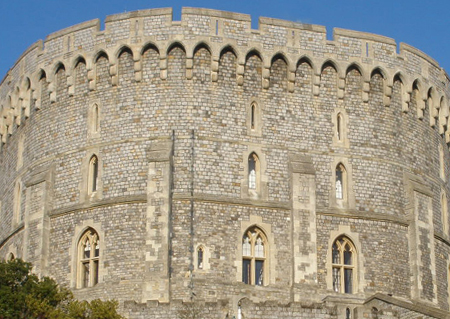
Windsor walls

Online payments are the big battle for beleaguered billionaires and their slightly poorer near peers. The Rupert Murdoch types cannot abide the idea that somewhere someone is getting something they touched for free.

No doubt that the basis of capitalism is that people or corporations own goods or services they make available for a price. Anything short of profit is called charity or foolishness (often the same to some capitalists). Yet publishers in this world only want conditions to be immutable so long as their profits are as higher or higher than they have been.

Lackaday, that very naughty net has made them look up from their counting tables.

Kind of Disclaimer

I’m prejudiced here. I have always loved newspapers and want them to flourish.

Growing up, we had two to four dailies delivered, depending on the pickings where we lived. I was a newspaper delivery boy. I went to j-school, climbed the ladder as writer, columnist and editor of the student paper (high school and college) and then worked dailies and weeklies in the South. As an adult, I’ve always gotten daily papers, as well as numerous news, literary and specialty magazines. I’m a print guy first, one who has simply added computers and net technologies on top.

I love the feel and smell of good books and magazines.

Survival of the Most With It

All that written, I have no doubt nearly all U.S. newspaper publishers and top editors are atavistic. They have also moved in recent decades with all the speed of a sloth and the judgment of an oat tree.

I’ve touched on this a few times, like here and part two here at Marry in Massachusetts. We got a different view in a Left Ahead! podcast with Martin Langeveld. He was a newspaper publisher and has quasi-retired into among other thing a principal at CircLabs, which aims to help publishers figure out this pay-to-view thing. (Another slight disclaimer is in order; he and his wife were classmates of mine in high school. I disagree with some of his positions, but I know and like them both.)glacier

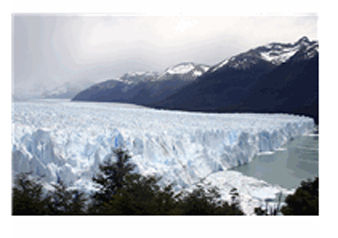
For this part of the discussion, the big point is that newspaper types saw the internet and its effects coming and coming and coming. It was much less like a train and more like a glacier. Unless you got out of the way or rode that glacier, it was going to take everything in its path. You had lots of time, but you had to decide what to do.

They have remained fairly paralyzed with inaction, indecision and more than a little delusion. Like watching that glacier, they saw new advertising options appear. They heard ad customers say Criag’s List was cheaper and more effective for classifieds and that online advertising offered highly targeted demographics with verifiable click through counts to ideal customers. They even heard to their humiliation that their favorite disdained group, bloggers, were getting snippets of ad revenue that should rightfully be theirs.

One type of response was to try to ride that glacier. Nearly all papers are online in one form or another. While screaming haughtily that they owned the news, damn it!, they responded to their declining ad money in exactly the wrong way — cutting expenses from the bottom, notably reporters.

Duh, as the yellowish Mr. Simpson says. Think, our product is better and worth reading and advertising in, even though we are giving you less of it, less local and foreign news, nothing unique, and nothing you can’t find in dozens of other places.

After slashing their differentiating advantage, reportage, they had yet other dumb tricks to perform. One we have seen even in our stodgy Boston Globe, is blogging. While on the one had ridiculing and demeaning blogs, even refusing to link to those whose ideas and leads they steal, the glib Globe has its own set.

From the beginning of this reaction, we see how out of it newspaper editors and publishers can be. The model is to take decent reporters and columnists and heap blogging duties on them. At the same time there are fewer writers, the remaining ones are supposed to do that on top of their jobs. Rather than giving the writers a chance to pick up a new skill, this looks from the outside at least, like the old “you’re lucky to have a job at all and will do as we tell you” routine.

The blogs show the coercion. Their posts are uniformly boring, show little effort and take no advantage of the medium.

Money, You Say

There’s a credible argument that most existing newspapers need to and should die. Their functions actually would be better performed by new media that understand reasonable financial models, the technology to deliver great stuff in the right formats with the right content, and some courage. The latter would be to do what’s necessary to provide salable product, without being immobilized by a primitive capitalist’s terror that someone might get something of yours without paying for it.

Yet, almost to a one, print publishers seem to have tiny brain pans, more driven by emotion than intellect. You can see that in how lamely they try to extract money from readers and advertisers to make up for their losses in the past decade or so (don’t lose sight of that glacier!).

Consider the scheme too many tried to maintain their many decades old system of high cash flow and higher rates of return. Those are the realities that changed due to the net and most publishers refuse to accept that. Instead:

  • Some came online after many other papers and immediately put up a solid paywall. Almost all content was in headline or incomplete form, requiring a subscription or per-article fee to view.
  • Others, like the Boston Herald here, showed its delusions like raggedly underwear. It tried to charge to read its columnists online. Let’s not even get into the value of a given piece by any of their writers, but suffice it to say, that failed quickly and totally.
  • Still others look at mixed models, offering full access to subscribers and small payments for beyond a monthly limit (the metered model). The FT reports that The Guardian has considered six paywall models.

For complete paywalls, your content has to be damned superior and useful to make a go. The number one fantasy of net-come-lately publishers is that if they pay to produce content, everyone else should be delighted to buy every morsel from them. News Corporation’s Rupert Murdoch is the troll under the bridge here, threatening, popping up, then withdrawing. He rants everywhere that news is not cheap and that anyone putting anything from his publications online anywhere without his permission and payment to him is simply stealing.Page 3/free mix

He even wants to charge for online access to the sleaziest of his pubs, The Sun. Yes, the Page 3 bare breasted babe rag is that valuable, Murdoch would have it.

Amusingly enough, one of his properties, the Wall Street Journal seems to have learned enough from the Financial Times to make some cash online though. In its announcement two months ago that it would copy these two somehow, someway, the New York Times seemed unsure whether it would be micro-payments or some other model. Its bosses do want some kind of paywall though.

A short-term answer may well lie in the partial success of the WSJ and FT experiments. They were not foolish enough to block and drive away casual surfers with solid firewalls and total blocking of content. Instead they provide an example that even the dullest publisher can profit by emulating. They charge for real value.

You don’t have to be in the financial press to consider what they do. Yet, it is obvious for them because it can translate into reader benefit. Some of their articles and columns have specialized and even unique information and analysis. Those who pay for a print or online subscription have a little (or arguably sometimes large) advantage. They are happy to pay.

So, while publishers watch the glacier some more and figure out in what direction to move, publishers can ask themselves what value they can add to attract paying customers (and loyal subscribers). The answer most certainly should not involve firing their writers. Honestly, what were they thinking?

Likewise, many local dailies and weeklies used to be best at hyperlocal content or sports or photography. They have done their best in efforts to cut costs that they eliminated the staff who could maintain those selling points. Moreover, to use a local example, when Bostonians want hyperlocal content, they are more likely to click on UniversalHub, an aggregator of local blogs and other news, plus some original reporting. Such concentrations of news are what the net can excel at and newspapers have largely ceded.

They need to produce content so useful or so entertaining or so whatever they can be best at that people will pay for it. That may seem obvious, but publishers so far have largely tried to replace old advertising and subscription revenue with increased charges for diminished content. I like to compare that to switching your high-end chocolate chip cookie ingredients to milk instead of bittersweet chips, mystery fat instead of butter and while you’re at it, making them smaller. Oh, and raise the price. Think. Think. Think. Why would fewer people be buying your cookies?

Those who continue to fantasize that they can charge everyone for any crap they publish might think of The Guardian’s editor, Alan Rusbridger. As part of a recent talk, he included, “It would be crazy if we were to all jump behind a pay wall and imagine that would solve things.” He is looking at many financial models, including some version of limited paywalls, but he does not seem to delude himself.

(Tip of the toupee to the FT’s John Gapper for the source of that quote.)

Cross-post: This appears at Harrumph!

Tags: , , , , ,

Prop. 8 from Both Sides


If the California same-sex marriage battle in federal court seems complex, Slate offers all the reminders you need. In A road map to Perry. v. Schwarzenegger, a law professor and a lawyer draw on the virtual white board.

There's nothing new in the lengthy piece. On the other hand, the complex arguments and what the federal judge faces in deciding now that we are at closing statements are myriad and befuddling. Chief U.S. District Judge Vaughn Walker might favor or disfavor this or that approach.

We interested voyeurs are on hold. The sides have 30 days to prepare their final rhetoric, reason and flourish. Then they make closing arguments and wait with the rest of us. Afterward, the losing side will surely do their best to get this up to the Supreme Court, which may or may not consider it.

If the legislative process is messy sausage making, such slow and intricate court cases are slower and more methodical. Think watching to see when and even if the waves will reach your beautiful sand castle.

Tags: , , , , , ,

Saturday, January 30, 2010

Deval to Talk Peril and Promise


Gov. Deval Patrick joins us on Left Ahead! Tuesday to talk about what he hopes to accomplish — and how — in his four year (and maybe the next four). Considering that he's two years ahead in office of his good friend Barack Obama and facing many of the same economic and political troubles, we're eager to ask and hear the answers.

This is at an unusual time to meet his schedule. He's on from 1 p.m. for a half hour. Because of the truncated session, we won't be taking listener questions or comments then. However, your intrepid trio will hang on line after he has to leave to discuss what he said. That would be a good time to call in with comments.

  • To listen live to the show, go to our BlogTalkRadio page at 1 p.m. Tuesday, 2/2/10.
  • To call-in between 1:30 and 2 p.m. use the New York number 718-664-6966. When the robo-voice welcomes you, press 1 on your key pad to let us know you have something to say.
After the show, the session will be online for listening or downloading at our BTR page, on Left Ahead! or on iTunes.

Tags: , , , , ,

Friday, January 29, 2010

Chicken Egg Chicken

Which must come first:
  • Hiring workers or higher orders?
  • Consumer spending or new jobs?
  • Consumer confidence or business confidence?
Those are among the big chicken-and-egg questions for our Great Recession. To put it in terms of George Bush the Lesser, it's un-American not to invest in America in times like these.

Yet, reading the financial press and listening to business owners on On Point , Here and Now and other radio programs, I hear inertia spurred by fear. Hesitation is too weak a description.

Even with today's possibly deceptive GDP-growth announcements, we have no reason to expect leaps of faith. In fact, with the widely acknowledged cowardice of banks in lending to small and medium businesses, we have at least that set of villains to blame...short term.

We may end up looking at businesses of all sizes to turn the cranks here and get our economic motor revving. This indeed is a matter of both patriotism and self-interest. If the engine turns the wheel, that means more of us working, more cash flow to consumers, more purchasing of goods and service, and the cycle continuing. At some point, even the dumbest bankers will throw in some money after they are convinced there's profit in the air.

It's a damned shame most banks are not doing their part. It's also wrong that most businesses sit tight, hoping and praying that others will do the hiring and pay their workers so their workers can buy things.

I think back to my days writing for Management Review and Inc. maggies. Nearly all business owners and top managers all seemed infected with the same delusional bug. I'd call it the cabby syndrome. Just like it seems impossible to talk with a cab driver who doesn't say, "I could write a book," business biggies all think their companies and industries are unique, that they themselves have keen and singular insight, and that their company/industry is the key to the nation's economy.

As it turned out, we on those magazine staffs did not ridicule their delusions. We would actually analyze what were similar and dissimilar aspects of their stories. If the sources needed to feel special, what's the harm in that?

Well, now is the time for all those allegedly unique and pivotal businesses to step up, speak out, and for God's sake hire someone!

Granted that bankers are not the heroes here, business owners standing stunned waiting for a turnaround won't inspire them or help companies. Our businesses can speed their own and the nation's recovery by showing some guts and having some faith.

Tags: , , , , ,

Thursday, January 28, 2010

Barack's Tepid GLBT Tea


Your President and mine brewed and served up more of his watery version of civil rights last evening. His words on don't-ask-don't-tell were lukewarm. Combined with what he left out, he needs to show some guts and action to be credible.

The punchline is that he gave an I'll-try (Congress permitting) on DADT. Yawn.

Even during his campaign, I called for decisive and quick action on that abomination and insult to Americans in and out of service. That was something he could have done early. Even just by an order as commander-in-chief of the armed services, he could have could have stopped the irrational enforcement of the WWII-era legacy of anti-gay discrimination. The old officers, including retired sorts like Sen. John McCain, need to hear that it's time for them to shut up on this.

Moreover, if the Prez was committed to civil rights, he would have called for states to pass same-sex marriage legislation. He would have pushed to overturn Pres. Bill Clinton's disgrace, the Defense of Marriage Act. Certainly, Obama could have hugged his fundy fantasy of one-man/one-woman-only marriage rituals and hidden in that archaic belief of his particular church and preachers. By our laws, churches and clerics are allowed to be bigoted...in their buildings and in public speech.

If this President wants moral and legal stature, he has to prove it. He has failed so far.

Much was made of the related content tucked almost at the end of his state-of-the-union speech. To wit:
Abroad, America's greatest source of strength has always been our ideals. The same is true at home. We find unity in our incredible diversity, drawing on the promise enshrined in our Constitution: the notion that we're all created equal; that no matter who you are or what you look like, if you abide by the law you should be protected by it; if you adhere to our common values you should be treated no different than anyone else. We must continually renew this promise. My administration has a Civil Rights Division that is once again prosecuting civil rights violations and employment discrimination. We finally strengthened our laws to protect against crimes driven by hate. This year, I will work with Congress and our military to finally repeal the law that denies gay Americans the right to serve the country they love because of who they are. It's the right thing to do.
Not only did he not mention SSM or DOMA, he only promised to work with Congress and our military on DADT. Yeah, Barack, that's played out real swell so far.

It's well past time for him to show some civil-rights leadership.

We can revisit another charismatic, rights phlegmatic President, John Kennedy. He also lacked the will to push civil rights. His VP, Lyndon Johnson, and AG, brother Bobby, did the heavy lifting and made those advances happen. Even if John Kennedy had lived, there's no reason to suppose he would have been more driven on rights than Obama has been.

We don't need to hear that our President has more important issues before him, that this is not the time to push GLBT rights in any form. This is not binary. It's not jobs or rights. It's not the economy or rights. Instead DADT and SSM/DOMA are part-time tasks.

What we need to see is commitment, compassion and understanding from the White House. We need to know he has courage and vision for Americans' rights. We need know he honestly believes, to use his words, "that we're all created equal; that no matter who you are or what you look like, if you abide by the law you should be protected by it; if you adhere to our common values you should be treated no different than anyone else. "

If he shows such real stuff, he has a huge bonus awaiting him. Inspiring Congress, even just the cowering Dems, to action on rights should prove to be just the catalyst progressives have been screaming for. Make them act, let them stand up for their constituents and all Americans. There's a huge political power there just waiting for such a spark.

Tags: , , , , , ,

Monday, January 25, 2010

Game Over, Obama?


GOP and winger sorts in general seem mired in that fallacy that saying something, naming something makes it real.

Following setbacks for progressives and moderates — think CA Prop. 8, Maine's plebiscite taking back SSM rights, and of course, a nothing GOP state senator taking Ted Kennedy's long-held U.S. Senate seat and the SCOTUS decision to let corporations buy elections — the cackling has been incessant. Like the witches in Macbeth or some Disney feature, cauldrons seethe and portends are uttered.

I hope for both history and theater's sakes that pundits are recording the outrageous and asinine absolute statement in the air, on the net and on paper. We all (I certainly am included) get excited and make absolute claims and extreme judgments, but the recent versions say much about the political divisions in the U.S.

It's been a combination of the D.C. version of the blue screen of death, the GAME OVER screen, and baser schadenfreude. Looming Senator from Massachusetts Scott Brown is the 41st vote against health-care reform. That is supposed to prove, among other thing, that:

  • Health-care reform in any permutation is permanently dead
  • All GOP Senators and Reps will ignore the needs and desires of their voters to stick it to Obama
  • Democrats will lose the mid-term Congressional elections wholesale
  • Americans will ignore the Bush/Cheney culpability for our national disasters and blame the current Dems
  • Anti-choice and anti-marriage-equality groups will return to their protected status under Bush the Lesser
  • American voters in a bunch will suddenly remember they are not the moderate to left-leaning types they've been for many decades

If the likes of FOXNews and other winger bloviaters were not delusional and running on emotion instead of brains, all of that would happen and by 2011 we would have a very different nation, one in the idealized mold of the basest of GOP operatives. Yet, they have been wrong so many times, so badly that you would think that even the stupidest of their followers would have caught on.

Regardless, Obama's team has gotten slapped around recently and more is in the works. His number one lesson is certainly not that Americans seek to return to a 1950s world of racism, lip service to fundamental religious nuts, and subservience of the middle and poor classes to a not so benevolent despotism of giant corporations. Instead, our President has to act on reality — his pledge to find a middle ground of bipartisanship to support progressive goals will happen only when he drops the Goody Two-Shoes act and behaves more like another President, one Lyndon Johnson.

As pseudo-news talking head Jon Stewart has noted and been quoted (segment below, minutes 6:36 to 9:20), even with only a 59-vote Senate majority, Dems have a greater majority than George the Lesser ever did. Plus, that Prez rammed through one major law after another.

The Daily Show With Jon StewartMon - Thurs 11p / 10c
Mass Backwards
www.thedailyshow.com
Daily Show
Full Episodes
Political HumorHealth Care Crisis

At least starting with Wednesday's first state of the union address, Obama needs to stand as high and tall as his ideas and ideals. There's debate over individual next steps, such as the power and meaning of denigrating bankers and forcing some financial-industry accountability. There's no debate over the miscalculation of assuming the GOP and blue-dog Dems have the welfare of the nation in mind.

Obama can consistently stand at the tiller and stand up to the bad guys. He must. He has to get directly involved in setting the agenda for health-care reform, as in what is acceptable in the bill, damn it. He has to frame that argument in terms of the millions of us at risk and who is to blame if this fails.

He has to remind us constantly that the winger way played out extraordinarily badly. The borrow-and-spend, the guns-and-butter GOP put us in unbelievable deficits and far worse national debt than any taxes possible. Thousands upon thousands of Americans and others are cremated, buried or missing from those wars of adventurism.

Above all, our President has to show as much courage has he has delivered rhetoric. Make the bad guys filibuster. Make them explain why they would screw millions out of lower health costs and greater security. Make them stand up and speak out against the commonweal. Make them show their constituents how lowbrow and mean-spirited they are.

Don't play their game. Make them show their hand.


Tags: , , , , ,

Friday, January 22, 2010

Deval's Brilliant Evening


You don't have to like the state of our commonwealth to admire last evening's state of the commonwealth speech. Gov. Deval Patrick was masterful in delivery of a brilliantly crafted oration...plus, it was clearly his first re-election campaign offering.

We now know what to expect in the coming months from him, both as governor and as candidate. It promises to be a high-toned and fair discussion. He left in the areas of blunder and plunder, as well as praised himself were he could back it up. (He did sidestep corruption and cronyism though.) He framed the pending conflict. That will decidedly be to his benefit.

Pic note: This image is from his original campaign, when he was less gray, speaking to bloggers in the basement of Boston Latin.

His SOTC speech is beautifully, professionally constructed. It makes fine use of several rhetorical devices, notably epistrophe, the repetition of a word at the end of a sentence or clause. The underlying campaign aim clearly is to get people believing this guy has important work to finish for us and we have to make sure he gets to do that.

Yet, this is certainly not the jolliest of times in the old Bay State. As Barack Obama two years later, Patrick arrived in office with extreme hopes based on his extreme promises. Both also came in promising to achieve a heretofore unknown level of cooperation by lawmakers and bureaucrats to manifest these aspirations. In no small part, they have failed.

A big factor there is the horrific, abiding great recession. Here though, Patrick's administration wasted time in realizing promises for the recalcitrance of the General Court. Simply put, he couldn't get funds and enabling legislation. The old boys and girls demanded to keep their power. Stick it to the governor and people!

To his credit, Patrick reminded us of his sweeping promises as he began to speak:
  • "good jobs at good wages all across the state"
  • "a great school in every neighborhood"
  • "citizens with renewed sense of community...each of us (having a stake) in each other's dreams and struggles"
Also, he cited such realities when he took office as:
  • "Young people were leaving the state"
  • "no real plan for job growth"
  • "public schools...too often failing poor children"
  • "roads and bridges...broken"
  • passed, but unimplemented health are reform
  • Beacon Hill "famously resistant to outsiders and to change"
He danced around blame, saying "Our task was made harder by bumps along the road - some of my own making I acknowledge, others left behind by predecessors, but most the result of a global economic collapse that no one foresaw and few living have ever experienced." It may comfort us to pretend no one saw the recession coming, but not accurate. Moreover, we were particularly hit where we had not invested sufficiently in industries and infrastructure in the previous two decades. Our businesses were not strong enough and we had avoided sensible expenditures pandering to businesses and an electorate who loves to hear no taxes.

Regardless, the only serious shortcoming in this speech was his skating over the "some of my own making I acknowledge." Likely, Patrick did not want to give future challengers ammunition. I think he would have been smarter to frame his blunders first and clearly rather than leaving it for competitors to define his negatives.

Otherwise, we have a seamless piece returning to several themes. First on accomplishments and reasons for them:
  • Continuing to solve Massachusetts' problems in the face of misfortunes, "because we made it personal, because we understood that a better, stronger Commonwealth would lift us all up."
  • That generality was in the context of other generalities of "we in state government had to make do with less, to improvise and innovate, to work harder..." just like businesses and individuals (in it together, don't you know).
  • Producing a $9 billion-reduced budget on time and balanced for the third consecutive year. Forget that this was a requirement. Instead believe that the administration understood and addressed the impact "that each cut would have on the people who depended on the program." Thus,"(w)e made it personal."
And so it went, each with the "personal" punchline. Not only did he lead investment in industries for future job growth, but he and his folk called business leaders daily to drum up jobs. Of course, making it personal. With health care reform, they didn't stop at the law, but continue to work to browbeat insurance companies into reducing costs. As the new norm, making it personal.

In the middle of the speech, he listed seven categories of wonderful results implying we are headed back into sunshine and wealth. In the main, these are narrowly selected and time constrained. For example, more are moving back into the state. Businesses poll higher confidence (suggesting maybe more hiring). We kept our AA bond rating.

Of greater significance was his promise just before that list of not cutting school funding — at the state level. He didn't address whether school districts will have to slash their own contributions, thus undermining the promise of that good school in every neighborhood. Yet, level funding from the state is a wise decision.

He did more campaigning on those seven points. He even repeated that he would tell the public "what it means." Not surprisingly, the meanings were personal. He used examples of students who could afford to stay in college and funded construction that would bring more temporary and permanent jobs.

The other major theme was about his pending re-election though. He made clear Franklin Roosevelt don't-change-horses-in-midstream statements repeatedly. He set this up early by citing a struggling mother/grandmother and saying, "So for her, for every other striver who aches for a better, stronger Commonwealth, we kept faith with our vision and kept going."

That was a setup for his conclusion list following "I know there's much more work to do. And I will not be satisfied until it's done." Assuming his long, deep agenda will not be realized in the next 10 and one half months, this assumes his re-election.

After that, our steady workhorse would:
  • Tackle unemployment and not "be satisfied until we have put all our people back to work."
  • Fix high health insurance costs "especially for small businesses and working families."
  • Get "as smart on crime as we are tough" by enacting sentencing and CORI reform.
  • Finding "a way to bring property taxes down."
  • Apparently totally transforming state government, consolidating "more agencies and (wringing) out of them every inefficiency."
Of course, huge obstacles loom there, even if we keep riding that same horse named Deval. Property taxes, for one example, are no mystery. Do what the legislature has never had the courage to — ease the burden on home owners by making businesses pay a fair tax comparable to other states'. Most of those goals and his original hopes and promises require a level of cooperation from the General Court he has received only intermittently and halfheartedly. (Again mirrored in D.C.)

He closed with a nod to the Howard Beale character in Network (I'm mad as hell and I'm not going to take this any more!") Patrick's more constructive call was, "Be angry - but channel it in a positive direction. It's easy to be against things. It takes tough-mindedness and courage to be for something." The implication, of course, is that our governor was already tough and brave, asking us to join him (and vote for him in November).

Unquestionably, we're in awful times. This speech didn't lie to us and did a bit to buoy us, keeping our vision ahead rather than self-pitying. It's real beauty though is that it spoke to the major components — grim and hopeful — while setting up the re-election bid. This is Oscar quality.

Tags: , , , , , ,

Wednesday, January 20, 2010

Elegance of Ballot Control

While recapping my battlefield promotion from clerk to warden at a Boston polling place yesterday, I thought repeatedly of the arcane and essential ballot control in the process. At least to a tech geek such as me, it has a true beauty.

A lot of planning and training and procedure development goes into ensuring one-voter/one-ballot here. Clerical controls are in the middle of it. The city accounts for every damned ballot many times with abounding crosschecks. While not impossible to scam the system to get two or more ballots, it would be damned hard and almost certainly not worth the trouble or risk.

Follow an unused ballot from the time it arrives at a polling location.

  1. Polls perk an hour before the 7 a.m. opening time. Elections workers have already brought the signs and other supplies and a police officer has brought a scanner and the blank ballots in a locked case.
  2. Workers (inspectors, interpreters, clerk and warden) arrive to tape up the many necessary signs, prepare check-in and check-out table, turn on and validate the scanner and assistive ballot preparing machine, and count the ballots.
  3. Depending on the expected turnout, blanks come bundled in nominal rubber-banded packs of 50 or 200. Poll workers first count bundles assuming the right number in each. These can vary by 6% (3 more or less in a 50 pack) because Elections prepares them by weight for efficiency.
  4. The clerk records the supposed number of blanks in the book.
  5. Before opening, inspectors hand count a group of bundles and put a Post-It on each with the actual number. The clerk keeps a running tally of each as it is brought into play to fine-tune the count of blanks.
  6. The scanner tracks each ballot it accepts, incrementing its count, which starts at zero. Throughout the day, Elections calls every few hours for the number and in busy elections, particularly primaries, observers from candidates and parties may look at the total, which does not differentiate by candidate.
  7. Spoiled ballots go back to Elections in their own envelope. If a voter mismarks a ballot, changes the decision before putting it in the scanner or marks too many candidates, the clerk or warden writes SPOILED on it, places it in the envelope and gives the voter up to a total of three ballots to get it right. The clerk tends to keep a tally of spoiled ballots and records them in the book at closing time.
  8. Absentee ballots arrive with the officer at opening and sometimes throughout the day as Elections sorts them. The clerk or warden opens the larger envelope and each absentee's cover envelope to find the sealed envelope with the ballot. Then each ballot is treated like a voter, checked in at one table off the voter list and out at the other table. Then the ballot is removed from the sealed envelope and fed into the scanner. The clerk records the number of absentee ballots in the book.
  9. Provisional ballots for voters Elections cannot clear to for scanned ballots go into unique envelopes, one per ballot. That's an elaborate process touched on in the battlefield promotion post. The warden provides each provisional voter with a ballot, which goes to Elections separately and is not scanned. The clerk records the number of provisional ballots as well as the voter's name and address.
  10. At poll closing the ballot procedures align. First, the officer at the check-out table and the clerk or inspector with the check-in book compare notes. They verify that they have the same number of voters checked off per page of their respective voter list. Any discrepancies give them the chance to identify anyone missed or mismarked. They end up with a total count of voters.
  11. Meanwhile, the warden has generated totals from the scanner. If there is a difference between the voting books and scanner's total, the three identify and correct it.
  12. The clerk then totals ballots the book. The total ballots received needs to equal ballots cast, accounting for the spoiled ones, provisionals, absentee ones delivered, and unused ballots remaining. Again, all stops until the numbers are accurate.
  13. The warden removed ballots from the scanner. Any that fail to scan are in one compartment; the get a re-feed and if necessary a hand count and recording in a log and the book. Write-ins are in another; they are hand recorded and placed in one envelope. The other ballots get a look for write-ins not ID'ed as such but clearly intended even without the write-in oval smeared. All scanned ballots go into envelopes that the officer delivers under lock to Elections.
If you were able to divert one or more ballots, then what? Without collusion of a worker and the officer, it would not qualify for the scanner. Even if you were able to sneak one in the scanner, it would mess up the total. Those and similar ploys would be possible, but elaborate, involving several people and surely not worth the exposure and punishments.

From my years of documenting computer software, I am impressed by the flow here. Elections has had a lot of time...with many eyes watching...to get this working well. It shows.

Cross-post: This likely belongs on Harrumph! with the related post.

Tags: , , , , ,

Cower or Punch


Whimper and hide or growl and fight seem President Obama and the Dems' choice after the Massachusetts Senate results yesterday. Those are clearly expressed in two columns this morning, one from the risible Globe guy Jeff Jacoby and the other from Financial Times Contributing Editor Simon Schama.

The former only has two tools — cheap malice and wishful thinking. He saw Scott Brown's defeat of Martha Coakley for the U.S. Senate as proof positive that Obama and his cohort have to surrender. Health reform and the rest of the big Dem issues have backfired and all the goodwill is gone. To Jacoby, MA voters "have killed ObamaCare. In so doing they have provided the president a priceless second chance to adjust his political course."

Back on planet earth, Schama has the much more grounded view. He writes that this is proof positive of something entirely different. He calls for Obama to stop the silliness of appeasement. This is the time for overt calls to populism, the bell to the opening round.

He lists the numerous big accomplishments of Obama's first year, domestically and a non-disastrous foreign policy. Schama diagnoses the President's malaise as one I see similar to Coakley's, a failure "in the exercise of the talent those of us who have watched him a long time assumed he had the mastery: taking control of the American narrative."
Art note:
I claim fair use of the snatch from the FT's Ingram Pinn's fine editorial cartoon.

Despite the winger fabulists' tale that a 5 to 6 point Brown victory is a total rout requiring Dems to surrender all and forever, Obama's directive is something else entirely. Fill the vacuum of passion created as he changed from candidate to top manager.

Schama notes that Obama to a big extent (and I would add Coakley in her timid nature as a miniaturized version) let "the hard right (roar) with infectious histrionic rage." He calls for the President to get down and dirty and avoid "the rarefied air of legislative achievement. American politics 'feeds instead on sound and fury; it is Mr Obama's job to make it signify something."

In this case, even if health reform is delayed for killed, financial regulatory reform is a great place for a battle. "Take it to the bad guys, Barack. Remind the country where it was when Republicans were still in the White House.

Tags: , , , , , , ,

Monday, January 18, 2010

Brown and Other No-Tax Fools

The guy in the WR Y with the huge, crude (like lipstick) tattoo of the leaping bass intends to vote for Scott Brown tomorrow. He and his wife on abutting weights equipment strained my relentless egalitarianism.

The alternating ads for Brown and Martha Coakley are easy to hear in the free-weights area. Upstairs in the clatter of treadmills, blustering buddies and such, breaks in radio music blend as background noise. Down here, both of these clowns traded what passed for political wisdom in their crowds. It was about his tax promises.

Surely some bright, educated folk will also vote for that destructive winger. I fear though many of his supporters don't know what he's really about beyond promises of lower taxes.

Unfortunately, Massachusetts in particular has a long, sordid history of this penny-wise/pound-foolish fantasy. The Dem controlled (since the mid-50s) General Court as well as our frequent Republican governors, sees a no new or reduced taxes pledge as a guarantee of election and re-election. Then in power, the GOP sorts jack up fees and claim these aren't taxes. The legislators spend on pet projects benefiting their local voters, while delaying necessary expenses to keep the tax promises. Thus, we end up with hugely inflated bills for infrastructure maintenance and no money for funding industries like biotech and electronics that would bring our economy back.

It's as stupid as a Bay Stater can get. Brown deserves the dunce cap, not a vote. By the bye, check the handy-dandy issues chart in today's Globe. You can go to Brown's numerous odious and hateful positions. However, start with the economy (he opposed tight financial regulations) and taxes:
Brown Opposes President Obama's proposal to tax large financial institutions to recoup taxpayers' investment in the economic recovery, saying raising taxes will kill jobs. Wants to extend Bush tax cuts for all taxpayers and reduce tax rates across the board.
We know for certain that his trickle-down theory is really piss-on theory. Piss on the middle and lower classes to the benefit of the wealthiest, who do not, will not and cannot share.

The no-new and lower taxes promises have worked many times here. We continue to pay the price with a stagnant economy and crumbling infrastructure, even before our great recession. Thanks a bunch, political con artists.

It's bad enough that we have a Scott Brown in our General Court. It's great that he has done almost nothing since being elected six years ago (even his website has nothing, nada, zilch to brag about). Otherwise, he might have been harmful.

We don't need another shortsighted fantasy peddler lying to us.

Tags: , , , , ,

Saturday, January 16, 2010

Manifesting the Marriage Mirage

Art strikes again, or at least the stereotypical urban, urbane, artsy maggy does. A splendid piece on the petition to the U.S. Supreme Court to allow same-sex marriage appears in the New Yorker.

The full article riffing on Perry v. Schwarzenegger is available here. The petition itself is also online here.

New Yorker writer Margaret Talbot puts all the game pieces in the right squares for us. She deals with the trepidation of the majority of LGBT and marriage equality organizations — most think this is too early too fast and begrudgingly support the suit. She notes where marriage-equality sorts have a solid advantage over interracial-marriage advocates in the middle of the last century — already about a third of us support SSM and over half would go for civil unions. She also deals with the major nibbler on the other end, Massachusetts-based Gay and Lesbian Advocates and Defenders (GLAD) — its current action is to get federal benefits for legally married SS couples.

She fully involves Perry's lawyers Theodore B. Olson and David Boies. Olsen was President G.W. Bush's solicitor general. He and Olson were opposing attorneys in the Bush v. Gore court battle over the 2000 election. Yet, the very conservative Olson thinks they have a good shot at legalizing SSM nationwide.

There's nothing on TV that's as intriguing as the New Yorker piece.

Tags: , , , , , , ,

Friday, January 15, 2010

Who Ya Callin' Smart?

A political catchphrase repeated to tedium is "Voters are smart." When pols and their minions chant this, they invariably mean, "Voters will agree with and go with us, because we're smart." In practice, they most often say this in the context of "voters are smart enough (to concur with our stated position)."

Alas, looking at whom we elect and re-elect, I don't buy it.

We have far too many examples from the local to national level of voters picking incompetent or malicious officials. The concept behind the smart-voter cliché is that such won't happen because as an aggregate, voters' mean choices will be the best available.

Instead, voters far too often fall into warm baths of false hope. They then elect the pol who best presents the fantasy they want. That's not smart, rather emotional and pretty dumb.

Consider the prime example in our lifetimes. No, it's not George Bush the Lesser. Go instead to his hero, Ronald Reagan.

Note that many Americans continue to delude themselves into thinking Reagan was right about many things and we'd be better off with more Presidents like him. They further bolster my postulate that voters are not smart.

Consider the mythical basis for his appeal. We can set aside how Californians could put a red-baiting, fourth-rate actor in their governor's chair, by the time he ran for President, he had that credential. More important, he gave us the chance to check our brains in the cloakroom. We just had to believe with him.

He wanted us to believe, among other fantasies that:
  • We could have guns and butter. Congress could spend endlessly on wars, weapons and such, yet magically have that figurative goose laying infinite golden eggs.
  • Deficits don't matter. He set the tone of the Bushes and their Congresses. Borrowing and spending, he held, was somehow different from taxing and spending.
  • Money from heaven. He bought into and sold the majority of voters the most destructive delusion of the WWII generation — that a never-ending spiral of economic growth was America's right, destiny, salvation and future.
  • Trickle-down economics would save us. He somehow made most of us believe that giving money in tax cuts and other grants to the wealthiest companies and individuals would benefit us all. We can go back from modern to feudal to ancient times to see how well that works. The rich and powerful take all they can, with a sense of entitlement and share nothing unless those crumbs given also benefit them.
How smart were voters in believing such fantasies? How smart are they today in continuing to see that history of failure and incompetence, yet insisting those were great times? How much confidence should we have in an electorate who make such decisions?

We confront the current special election for the U.S. Senate from Massachusetts. Within reach of the seat is an extreme right-winger, Scott Brown. His real opponent is moderate yet quite competent Martha Coakley. He is running on pledges to stop health-care reform if he can and overturn it otherwise later. He is odious in so many ways — pro-t0rture, pro-tax cuts for the richest, pro-expanded Mid-East war, and on and on. He's bad news for women, the poor, the middle-class, and virtually everyone except rich, white folk.

Yet, about half these allegedly smart voters say they may go for him on Tuesday. As Patrick Henry might have said looking at Brown, "Forbid it, Almighty God!"

There's no way to go to adults of 20, 40, 60 or 80 and teach each one how to separate fantasy and need from the real and reason. We are reduced to outnumbering them.

Get to the polls on Tuesday, bring two friends, call six others, and email everyone else you know registered in Massachusetts. Tell them this is crucial. Voting for Martha Coakley is better than just the right thing to do, it's also the smart thing.

Readers here know I would rather Michael Capuano represented Dems in this election. However, to quote another favorite, Lenny Bruce, "Reality is what is. What should be is a dirty lie."

The choice on Tuesday is clear. Brown is a destructive, vindictive, petty winger of little accomplishment and much malice. He is as anti-progressive as anyone outside a mental institution. Vote Coakley for all our sakes.

Tags: , , , , ,

Thursday, January 14, 2010

Tracking the Brown Meteor


Current conventional punditry here is delighted with its newest consensus. That would be that regardless of the outcome of next week's special election for U.S. Senate, MA Republicans and candidate Scott Brown win. The idea is a good, better or great showing by PlayBrown would vivify the trivial GOP here and likely lead to high statewide office for him, like governor.

This is a state where 51% of voters are unenrolled in any party. This seems akin to their disdain for signaling turns when driving. Never give the enemy information on where you're heading. In reality, of course, the vast majority of voters here go Dem in an election. They are made of the same wishy-washy stuff as their moderate Dem elected officials. On the GOP side, 12.5% of voters are Republicans and in the most generous polls of active and likely voters, that climbs only to 16%

Brown's brilliant and assured future is a very appealing construct, but both facile and very short-sighted. I think we like the idea of Brown and the elephants getting strong. That would liven up the facade of politics here, if not the interior. In reality, the General Court has many Republicans disguised as DINOs. Senators and representatives, particularly from the less urban, nearly all white, areas are Republicans by New England standards. They form a kind of fifth column that helps the lethargic non-progressive Dems in the legislature stay stagnant and stifle needed systemic improvements.

So let's assume Brown does very well next Tuesday, like within 10 points of Dem Martha Coakley. The pundits have it that inside and outside conservative donors will pour cash into the MA GOP. That will lead to more state legislators, a good chance at the freed-up statewide offices, and likely a governorship for the winning-losing candidate Brown.

I call fantasy on that. Mid- and long-term Brown can only be destructive to the GOP here (call me on this in a year and two years if I'm wrong).

The elegant possibility of a resurgent GOP here understandably intrigues us all. Both for our Gov. Deval Patrick and President Barack Obama, we see parallel dynamics. Both came into office with hippie-dippy promises of getting everyone to work together for the common good — after all, both pols claimed, they had done that elsewhere. Then once in office, both struggled mightily to get those necessary compromises, and in the case of Patrick, were thwarted in every single effort to get the funding and other resources to correct decades of problems. So far, with two years for Patrick and one for Obama, citizens have been unforgiving in demanding that they fix long-term trouble in a relative flash.

So, sure, we hold our the typical national fantasy of grand times just over the hill. As a group, we voters do like to delude ourselves. It was a lot of years ago (1928) when Al Smith was the Democratic Presidential candidate. He said, "The American people never carry an umbrella. They prepare to walk in the eternal sunshine."

For our local GOP though, their Cosmo flasher does not presage great things. Let's all face the too clear fact that he is terrifically out of place and out of touch. For this state and this century he has virtually all the wrong positions — pro-war, pro-gun, pro-torture, pro-rich tax cuts, anti-choice, anti-marriage equality, anti-health reform...it goes on and on and on.

If the GOP hooks its wagon to this star, it will find the fragile vehicle incinerated all too quickly. In this foreshortened Senate race, Brown has benefited immensely from two factors. First, people have not really gotten to know him and examine both his positions and miserable record as a state senator. Moreover, the cautious and timid Coakley has not brought the game to him.

This was his freebie. He got to commit one foul after another without penalty. No matter what the next go will be for him, he is certainly to be shocked by being held responsible for what he has said and done as a pol.

For certain, the GOP needs champions here. Yet, as they do nationally, they need to stop imaging that the delusional clichés of Reagan and Bush the Lesser will work again. Americans were fooled too often and too long. They need a less extreme hero than the winger Scott Brown.

Tags: , , , , ,

Wednesday, January 13, 2010

Vote, Damn It and for Coakley!


The Dem candidate in the special election to fill Ted Kennedy's U.S. Senate seat deserves and needs your vote next Tuesday, January 19th. This surely will be a very lightly attended election. Your vote is crucial.

Smear the oval for Martha Coakley on Tuesday. Of the three on the ballot, she is the only worthy option.

The other ovals belong to the Libertarian Joe Kennedy and Republican Scott Brown. Despite the confusing and dis-familial name, the Kennedy has no chance and in the amusing fantasy of his victory, he would be so out of sync with the Senate that he'd be a one-person freak show. Brown though has a slim chance and deserves to lose...ideally soundly.

Brown likes to parse the terms finely, but he is no Weld Republican nor even a Romney style. This Wrentham-based state senator is a great example of why his party has foundered so badly here. He is terrifically out of step with the commonwealth. He is:
  • pro-guns
  • pro-war
  • pro-torture
  • anti-woman's choice
  • anti-same sex marriage
  • anti-health reform (would vote against it and try to repeal it if it passes)
  • pro-tax cuts for the rich (is a trickle-down economics buffoon, despite history and reason)
  • xenophobic (proclaiming that leading undocumented immigrants to citizenship only encourages more)
There's much more, but basically, he'd fit much better in Idaho than Massachusetts.

He is pretty, in kind of a Play-Doh figure sort of way. But we're not voting on the next top model. Rather, we are in the midst of key votes on health-care and more. We are looking at a job that normally is the Senator's as long as he or she wants it. This is not a decision to ignore or make on a whim.

Coakley is wholly adequate, if boring. She has lately taken to telling people she's fun and funny. You can be sure if you need to say that, you are neither. Both other candidates tell jokes far better than she does, but we're not electing the junior comedian from Massachusetts.

For all our sakes, get yourself to the polls on Tuesday. There's a great chance there'll be no waiting. It's minimal effort on your part. Plus, it's damned important.

Tags: , , , ,

Tuesday, January 12, 2010

Shining Light on Cops

Massachusetts cops don't seem to be the brightest and best socialized citizens. For one, they don't have a sense of limits, they don't know when to stop.

Coming up on three years ago, I touched on this in a call for real civilian review boards in Boston and also in this one. There have also been numerous cases in which cops seem to get away with egregious misbehavior, even involving death.

In such one-on-one cases, the police unions invariably and maybe understandably rally to their member's defense — regardless of the evidence.

Now they are overreaching yet again. This time, it is a systemic issue and they are bound to lose. They'll end up helping citizens and letting the courts and legislature slap down their abuse of law and liberty.

Here they have pitted their outrageous claims against First Amendment rights of citizens. Not only would they spit on Massachusetts law, but want to kick around the U.S. Constitution. Bad ploy.

The issue is the total misapplication of the commonwealth wiretapping law, Chapter 272, Section 99. The police have pulled this trick before and have come back again. Yesterday's Boston Globe has a long article citing several cases and how dishonest and dishonorable the cops here have been about it. The Citizen's Media Law Project is among the watchdogs on this case too.

The gist is that this is one of a dozen states with laws designed to protect plain old citizens, not misbehaving cops. In a lot of words, it includes requirements that people can't wiretap or videotape each other (even with cellphones) without the other side knowing what's up.

The cops want the courts to construe this to mean that the worst of them can slap around kids on the street or worse, with no fear of people recording their actions and victims using that as proof in pressing charges. Outrageous.

There are lots of good cops, but the worst of them have to be retrained, booted or otherwise punished. When they are in public, they should expect that anything they do or say might end up as a public record, bumping up into a DA's office and as evidence in court as appropriate.

As many note, cops in patrol cars often have dash cameras recording images and sound. They use these for their own protection. However, even here, some of the more arrogant and less bright officers still abuse citizens with the cameras digitizing it all. Our local cops want courts to rule that citizens don't have the similar First Amendment rights to record what is happening in plain sight.

It's good that both the Boston Police hierarchy and the patrolman's union pretend that using a cell phone at a distance to record police misconduct is interfering with an arrest. This should inspire the courts and legislature to refine 272/99. Meanwhile, they have won and lost wrongful arrest charges on their intentional misapplication of this law.

Let the General Court step up and step in. Bad cops should not get a free pass. The police unions should never be allowed to transform a law protecting civilian privacy to hide members from consequences of their actions.

There is the old truism that character is what you are in the dark. In this cellphone era, there's a lot more light around that those without character would like.

Tags: , , , , ,

Podcast Bookkeeping

We had, as they say, a spirited discussion at Left Ahead! this afternoon. Ryan and I covered security at airports and otherwise. We got a couple of callers as well, including one making a strong argument for private citizens packing heat on planes as terrorist deterrent.

You can click the player here if you want to listen.

Next week's show will be at the usual time, but a day later. It will run at 2:30 p.m. Eastern on Wednesday, January 20th. The live stream is here.

The delay will give us the chance to discuss the special election results for the U.S. Senate. We'll have MA Dem Party head John Walsh on with us to talk about the short and mid-term prospects for the two major parties here and nationwide.

If you want to weigh in, the call-in number is 718-664-6966. When the robo-voice welcomes you, press 1 on your phone keypad if you want to speak.

Tags: , , , , ,