Thursday, December 13, 2007

Parents Rights:Evils They See in Books


We can't begin to understand the self-identified parents-rights groups without considering their fear of ideas and books that contain ideas. These folk include an astonishing number of ideophobics and bibliophobics who fear and disdain the power and potential for evil of specific ideas and books.

This is part four of a series. Part one of basic concepts and the Mad Dad case is here. Part two on the attack of the control people is here. An overview of this mini-movement's aims is here.

Likely nearly all of us concede that some ideas are inherently evil. For the most repeated extreme, consider the Nazi concepts that whole sets of people their leaders asserted were inferior — Jews, Roms (gypsies), homosexuals, Roman Catholics and others — should either be worked to death as slaves or murdered or both in turn. Worldwide a few crackpots might support such concepts, but damned few.

Even so, refusing to admit such things ever happened or that some people could, did and do champion them is simultaneously cowardly, dishonest and anti-intellectual. Far better would be to expose people to the history and philosophy. Only then can the naive or unaware evaluate the ideas in their framework and in discussions. Hiding ideas or realities neither develops the mind nor, as Ovid might have written, humanizes the character (and not allow it to become cruel).

If we are to socialize our children, we must expose them to essential ideas and realities. Most of us parents also recognize that we instruct them in our thought and ideals, by both our words and actions. We are, in Kahlil Gibran's lingo, the bows and our children the arrows. We guide them as truly as we can, but we must let fly. It would seem that some parents-rights types want to hold that arrow, very tightly, until the kids are at least 18.

Some in the parents rights mini-movement seem to have little faith in their own modeling and teaching, and much less in their children's ability to think. We are still seeing this in pure form here, most obviously in the Lexington school case. The two couples appealing their loss in the Mad Dad lawsuit do honestly seem horrified at what the vast majority of their Lexington peers consider benign or positive ideas and expressions. They claimed in state and federal filings that even mentioning the reality that there are legally married same-sex couples is sex education and indoctrination. They even charged that this somehow prevents them from teaching their children what the foursome consider right and moral.

To most us of us, such hyperbole and well, irrationality, is a little sad and a lot silly. Unfortunately, both in Lexington and in little craters of such explosions elsewhere in the nation, this repeats. Such befuddled parents do far more than hamper their kids' ability to think.They use direct confrontation and even legal tactics to try to force their personal views on the entire community.

In the Mad Dad case, they demanded that teachers not mention, much less read, any of a list of taboo concepts around their kids. That could have taken the form of censoring topics for everyone, even those that arise spontaneously. Alternately, they would have their kids removed from each classroom any time any taboo arose.

The U.S. District Court Justice Mark L. Wolf pooh-poohed those demands in the foursome's court hearing, as well as in his dismissal of their suit. However, the battle continues on another front to pit parents-rights groups against librarians, educators and the most parents.

Skirmishes occur regularly in school and public libraries throughout the country. Despite our U.S. Constitutional Bill of Rights and our long history from colonial times of fighting such censorship, these groups fight on.

Personal Confession

I have to admit that I have loved books and libraries from my early reader days. Perhaps my sister is partially to blame. She is two years older and taught me to read when most kids were barely speaking whole sentences.

Our mother too was key. She kept a house of a thousand or more books at all times, always with at least one set of adult encyclopedia and a broad range of reference, non-fiction and fiction. When I asked about any topic, she'd generally say, "Look it up." Off I'd go to research and to think and to discuss at dinner or in the evening.

We read then and do now. She forbade us no book or idea and was always available to discuss anything we did not understand or that conflicted with her teachings, those of school or those at church. I lived in a home of ideas, not rote learning.

As the Alexander Pope wrote nearly three hundred years ago:
A little learning is a dangerous thing;
Drink deep, or taste not the Pierian spring:
There shallow draughts intoxicate the brain,
And drinking largely sobers us again.
Then in elementary school, I was also smitten by the lovely and involved children's librarian at the public facility in Danville, Virginia. The building itself was a grand mansion that had been home to a Confederate officer and housed the last days of the CSA. In the huge lower floor, I read everything in the children's area, starting with anything to do with dinosaurs or gods from anywhere. That librarian was so impressed by my taking out as many books as I could carry each week, that she was ready when I had read the room. She spoke with the head librarian and got me rights to all the adult books, after which she gave me lists of suggested reading to keep me perking.

From my own experience alone, I cannot believe that typical elementary school students must be protected from ideas. Such ways stunt intellect and emotion. The many students I have known were not primitive ignorami who needed shielding from ideas lest they be overpowered by them. Likewise, my beloved librarian in Danville never showed any evidence that she considered my brain too fragile to process information.

Public Funding

Those who would cull collections often claim that public funds should not buy books that the community (as in the cullers) object to being on shelves. Those more aligned with the American Library Association (ALA) free-speech-and-ideas guidelines are wont to say that public funds mean that the public libraries should never be controlled by such special interests.

According to various parents-rights websites, the ALA is on par with the United Nations as a bugbear. This seems to go back to those control issues. The ALA's position is that "Decisions about what materials are suitable for particular children should be made by the people who know them best—their parents or guardians." On the other hand, it angers that subset of parents with two freedom-oriented policy positions:
  1. No one censors books by deciding for everyone what goes on the shelves. Selection i's the job and judgment of the professional librarians and the library boards.
  2. After advising their kids, parent should not dictate what material they can examine in the library or have access to records of what they have requested or checked out.
A stark and startling bifurcation separates the parents-rights advocates from Bill of Rights supporters and free-idea digesters. For my own rant on letting kids read what's on the shelves, click here.

Like so many, I have my own preconceptions of librarians, such as their being:
  • Quiet, unassuming public servants
  • Helpers of kids learning to research
  • Guides to the information you need
My wife volunteers in a school library and has the slightly grander view, as depicted in the New Jersey Super Librarian shown to the left. In fact, librarians are often civil libertarians of high order.

Neither of us shares a common view of parents-right types. For the ALA-as-dictator concepts, try some of the self-defined safe-libraries sites, such as Citizens of Positive Education or the Collecting My Thoughts blog. They seem to think kids have very fragile minds and to have real problems not feeling in control of what's on the shelves. Those sites can link to numerous others of similar bent.

Fortunately for the rest of us, these groups and individuals run across opposition to censorship. In fact, the groups are quick to try generally unsuccessfully to hold that they do not want to censor. Considering that their stated aims and actions attempt to determine what books libraries can stock, they are unlikely to be able to make that case.

In the face of this, several of them try to it's-my-money approach that occasionally works. For example, that COPE group states, "We are not for any limits on what people may see and read. However, certain things simply do not need to be funded with the taxpayer’s support and made available in America’s public libraries." That's still censorship, but that version can appeal to fiscal conservatives.

Stifling Schools

Some other factions of this set of parents would like to determine, as in Lexington, both what is on the school library shelves and what they kids read and hear in the classroom. For an example, try the Parents Against Bad Books in Schools site. They have the usual scare tactics, centered on picking excerpts from various books to convince people that there's something terribly immoral out there within their tots' grasp.

On the other hand, they do offer a reactionary, but thorough what-to-do page for like-minded parents. It has specific suggestions on how to challenge or work within the system to remove books and their related subversive ideas. This is refreshingly like portions of Saul Alinsky's Rules for Radicals. It avoids the annoying whining and demanding, replacing these with action. I can disagree with the premises and aims, but applaud the methods.

The other big library issue is whether kids can expect any privacy in their thought process. Many parents-rights types scream, "NO!" A common battle is over whether libraries will provide lists of materials children have requested or checked out when a parent asks.

In this nation and time, you might suppose the answer would be that even children should be able to read and think without fear of retribution and with a modicum of privacy. After all, both school and public libraries have procedures to prevent minors from accessing adult material. Regardless of how some groups would like to remove all such materials or classify much more as adults-only, they are far from being able to do either.

However, the issue of library records is far spottier. The parents-rights groups won that in Wisconsin, but have repeatedly lost it in most other places. Particularly because this is a skirmish that can be waged very locally as well as statewide, we can all expect this to come to a library near us.

Some groups, such as Family Friendly Libraries, also incorporate the it's-my-money approach. They expand that to a conspiratorial view that librarians had better keep and make available all records...or the terrorists have won. They write, "When libraries systematically purge Internet and borrowing records, they are effectively playing the role of the accomplice who flushes evidence while a criminal climbs out the window. When law enforcement officials arrive at a library with a subpoena or search (warrant), all records which might serve as evidence are gone."

Yet the underlying issue seems instead to be an assertion that minors should have no privacy and that parents have an absolute right to see what the kids check out. The c9ntrol and the assert9oin of new rights appear again.

Tale of Two States

On this, contrast Wisconsin and Massachusetts. The former has pockets of liberalism and swatches of conservatives. The latter is more the mirror image of that.

In Wisconsin four years ago, Rep. Sheryl Albers successfully led the effort to add wording to state law that requires libraries to provide such lists on demand to parents of children 16 and younger. As she said at the time, "It's a parental right."

She helped this become a right, although it had not been before. Her opponents, such as Rep. Marlin Schneider in contrast called it "a major invasion of the right of privacy of children. Children need to understand their rights are protected, and if government won't protect their rights, nobody will." Sen. Fred Risser added, "I think we should encourage kids to use libraries, encourage their minds to be open to new ideas. I don't know why we should have the public libraries be an investigative arm for parents."

By contrast, public policy and law here favor privacy and freedom of speech. Our laws, Chapter 78: Section 7, for example, includes strictures such as "That part of the records of a public library which reveals the identity and intellectual pursuits of a person using such library shall not be a public record..." Along the same line, the Boston Public Library privacy policy reads that "Circulation, registration information, and information retrieval records may not be disclosed except to: 1. The cardholder (with card or other proper id). NOTE: This is regardless of age or relationship. For example, parents cannot be told what materials a child has checked out without the child’s consent..."

On this subject as the other cited in this series, the Boston position differs radically from the parents-rights advocates. Again, it is an issue of control and the new and broadened privileges they claim as rights. They are unlikely to ever get what they did in Wisconsin statewide in Massachusetts or even in any populous area.

However, they might have a shot at school libraries or small public facilities. So far, they don't seem to be going the Alinsky path of joining the decision-making education or library boards. As those bodies are typically elected, it seems unlikely such regressive candidates would get seats, much less earn a majority.

Nonetheless, the twin issues of what's on the shelf and who can peek over the kids' shoulders are not going away.

Tags: , , , , , , , , ,

Wednesday, December 12, 2007

Parents Rights:What Do These People Want?


Zooming in on those who demand parents rights in schools and libraries, and controlling their kids without any government involvement, who are these people and what do they want?

Without getting involved in any conspiratorial theories at all, you can easily find that while they come from various cities and states, and concentrate on one theme more than another, there is surprising agreement and coordination of effort. They are still a very small minority, but they have intense passion and righteousness. They simply think differently than you and I.

This is part three of a series. The next part will concentrate on efforts to control public and school libraries. Part one of basic concepts and the Mad Dad case is here. Part two on the attack of the control people is here. The post on the efforts to control ideas and books in school and libraries is here.

As much as I avoid the ask/answer questions format, this is a good place to deal with what do these people want? On the surface, the parents-rights sorts who want to control public institutions come from various viewpoints. Yet, they end up wanting a very similar set of goals — an agenda, to use their own slur on the progressives. Moreover, there are some underlying themes that tie each agendum together with the others.

By their own statements, publications and websites, they want:
  • To establish by law a right for parents to control what information public-school students read or hear.
  • To prohibit by law interference with corporal punishment as a training method for parents to use on their children.
  • A nationwide parents-rights law that forbids states defining broad powers for them that do not exist.
  • To stop any sex, health or sexuality education or diversity curricula in public schools, reserving anything remotely related to "moral training" to parents.
  • To require that parents opt into any such topic instead of merely having the choice of opting out.
  • To define as taboo in school even mentions that homosexuality exists, as well as civil unions or same sex marriage in states where those are already legal.
  • To permit parental access on demand to any school or public library records of what their minor children view or check out.
Some of the more extreme of these extremists also want:
  • Abolition of public education, including any taxation for such purposes.
  • School vouchers for any parents who do not want their children to attend public schools.
  • Limits on or dissolution of state child protective agencies with the power to investigate neglect and abuse cases.

UN and Control Issues

The United Nation's Convention on the Rights of the Child clearly illustrates the distinctions between parents-rights advocates and the rest of us. Read it for yourself to see that it is alternately benign, commonsensical, and humane. Yet it will cause parents-rights sorts to rant and turn colors.

Of course, for many wingers, anything associated with the UN is an issue, which has been the case since President Woodrow Wilson first worked for membership in the League of Nations following WWI. Here, the control issues we mentioned in part two of this series flare. As we saw with the League, the UN and the Kyoto Protocol on protecting the climate, the underlying problem for U.S. rightists is the same. If we sign on, we cede some of our power, or rights, or control...control.

The Parental Rights Organization's assault on the Convention is typical of the hysteria on this and the core issue. Reduced to its simplest, these ask if they can't beat their children at will and must allow them to evaluate information on their own, what is left for parents?!

Meanwhile, as with Kyoto, we stand with only the basest nations. For the Convention on the Rights of the Child, only two nations have not ratified it in whole or part. Those two are perennial human-rights violator Somalia and the United States. That's not good company to be linked with. President Clinton signed the Convention, but the U.S. Senate has refused to ratify it.

So, you might well wonder what is it that inspired 190 countries to sign onto this document to foster children's well-being that so horrifies our Senate and these winger groups. A clear subhead list comes from the Home School Legal Defense Association, including:
  • Overall, disregard for parental authority (presently a "right" only in the minds of the parental-rights folk).
  • "Severe Limitations Placed on the Parents' Right to Train Their Children."
  • Article 13 gives kids the right to read or hear information and evaluation it; the dreaded freedom of expression.
  • Article 14 likewise permits freedom of thought, conscience and religion. This keeps parents from mandating religious training to suit themselves.
  • Article 15 permits freedom of association for children. Parents would have to convince kids to pick or not pick friends instead of forcing their will on them.
  • Article 16 gives kids privacy rights. These groups claim without basis that this means children would thus have unrestricted rights to birth control and abortion as a result.
  • Article 19 is perhaps the worst lunacy of all misinterpretations by the parents-rights groups. It says that the governments must act "to protect the child from all forms of physical or mental violence, injury or abuse, neglect or negligent treatment, maltreatment or exploitation, including sexual abuse." This is the widest chasm between the groups and the rest of us. They would have us believe that virtually all child abuse and neglect claims are trumped up lies, and that such mandates will create many more such unnecessary prosecutions of loving parents.
  • Articles 3, 19 and 37 for "Prohibition on Corporal Punishment. They do, in fact, prohibit torture and other inhumane treatment of children. Unfortunately a subset of the parents-rights groups calls regularly beating children with sticks, paddles and straps "loving correction."
  • Article 29 also seems particularly odious to the wingers. It could have been written by a Unitarian; it is so egalitarian. It directs an education that develops a child to full potential. The extreme parents-rights types home in on its section (d) The preparation of the child for responsible life in a free society, in the spirit of understanding, peace, tolerance, equality of sexes, and friendship among all peoples, ethnic, national and religious groups and persons of indigenous origin. In case you are such a pinko that you don't feel the terror in that, be aware that to the parental control freaks this means that kids may have to consider that it might not be okay to hate and fear homosexuals and others, even if their parents do.
Consider the recap from a widely cited 1990 article by Barbara Johnson, then of the Alberta Federation of Women United for Families. Her statement continues to appear in various forms, saying:
The danger of the Convention is posed by the fact that it portrays the state as the protector of children, and the arbiter of how a child should be raised. In pre-emptying this role from the parents, it will inevitably result in weakening the family unit further, and thereby doing untold harm to the children it purports to be advocating for. For, in the end, the only real chance a child has to grow up safe and whole, to live and grow and learn and find happiness, is to be raised in a strong family.

Asserting New Rights

This chasm seemed to become unfordable in the mid to late 1990s with efforts to pass state and national amendments formalizing extreme parents-rights. These so far have failed but the attempts clearly illustrate the divide between these groups and the vast majority of the world.

On one side is a relatively small set of fervent believers in their own brand of parents rights. Many say that their scriptures inform them that the father in particular and parents together have absolute rights over their children's minds, emotions and bodies until they reach majority. While there is scant legal or moral basis for that, as Bob Dylan wrote in 1963, "You never ask questions when God's on your side."

On the other side are normal parents and many dozens of children's rights, civil rights and other organizations, plus governmental agencies, saying, "Not so fast. Your kids are not property for you to do with as your whims and fantasies compel."

The efforts a decade ago to pass a national parents-rights amendment, plus a test one in Colorado, carry a lot of baggage. Granted, the People for the American Way are heavily human-rights oriented, but they have a great set of pages on the national effort, including arguments of those in favor of passing it.

For a microcosm, see the Guttmacher Institute's analysis of why the drive to pass this as the laboratory failed in very conservative Colorado. The short of it is that the anti-amendment side faced the obvious. The LITE version presented by the pro-amendment forces was parents should be able to raise their own kids their own way. That was hard to argue with until the anti forces polled the public and presented a message of:

  • The amendment was dangerous, because children would be left in abusive homes and teenagers would be prevented from obtaining information and services that would help them avoid pregnancy, STDs and abortion.
  • It was unnecessary, because parents already have the right to raise their children as they see fit.
  • Although attractive on paper, in practice it would turn public schools into ideological battlegrounds for parents with opposing values and make adoptions more difficult because adoptive placements could be challenged in court.
  • And it was so vague that it would result in a flood of litigation initiated by angry parents, at taxpayers' expense, against anyone working with children, including teachers, librarians, social workers and counselors.
Again, when the control issue of a few faced reality, the larger public said the risks were way too high to play the game.

Public Says No!

Originally, the Congressional version of the bill was The Federal Parental Rights and Responsibilities Act (H.R. 1946/S. 984). It was very big on rights and virtually devoid of any responsibilities. That seems to be the insurmountable problem of the parents-rights groups. They want to be given legal authority to do whatever they want with their children in private being answerable to no one, private or government.

That's not how it has worked for a couple of centuries in this country and elsewhere. As I cited in the previous parts of the series, existing customs and laws share responsibility for the welfare of children to compensate for irresponsible and abusive parents. It's awful beyond discussion that they exist, but they do. We can't grant all parents absolute rights to do whatever they wish with their children; we have far too much history showing that too many will not be responsible or parental.

I rather doubt that any hard-core parents-rights groupie will realize that he or she had it wrong. They will continue to push, hard, for what we in the larger society refuse to grant.

Tags: , , , , , , , , ,

Tuesday, December 11, 2007

Parents Rights:Who's Your Daddy?

Control is the concept behind the parents-rights folk we are hearing here. They both want to be in charge and don't want anyone else in charge.

This is part two of a series on parents-rights aims. Part one is here. An overview of this mini-movement's aims is here. The assaults on ideas and books in schools and libraries is here.
Terminology note: Authoritative personality and authoritarian personality share traits and sound alike, but are significantly different. The latter, detailed by Adorno et alia, has been largely discredited because of sloppy methodology and a simplistic test linking authoritarian personality types with totalitarianism.

The former easily translates into pop psychology in concepts such as the headman or alpha male. These sorts can be natural leaders or bullies or both. They need unambiguous authority. They will accept it or if it is absent, supply it. Stereotypically, you see this in behavior of a cocksure authoritative type's wife. While she seems around him to revel in and submit to his pronouncements, when he is not there, she'll happily play the role until he returns.
It appears as through prevalence of authoritative types in the parents-rights groups prevents compromise. Those who view their goals as a zero-sum game are not likely to compromise, are likely to use a Randian style of false-premise shout-down to interrupt any argument they don't like, and may not accept even obvious defeats.

We can consider the Mad Dad case to illustrate many aspects of this.
  • Removing books from classrooms, libraries or optional diversity bags sent for parental review is not censorship, he avows.
  • Demanding that the teacher call the parents and remove his child from the classroom whenever a pre-defined taboo-to-him subject arises, even spontaneously, is not attempting to control curriculum or placing unreasonable demands on the school system, he avers.
  • A teacher mentioning that some kindergarten or elementary school families have two moms or two dads usurps his absolute right to moral education of his child, he states.
For anyone who has recently arrived or who has avoided coverage of nearly three years of this silliness, be aware of the basics.
  • Mad Dad and Mrs. Dad received the same kindergarten diversity book bag for parent review as other families.
  • It contained a picture book that included drawings of single-parent, mom/dad, mom/mom and dad/dad families, all engaged in common activities like cooking dinner.
  • Rather than removing the book and letting his son have the others, Mad Dad began making those demands for the classroom and school.
  • When he didn't get what he demanded, he staged a sit-in in school offices and remained for hours until the police were unable to convince him to go home and arrested him for trespass.
For deeper background, search this blog or MassResistance Watch or Mad Dad-friendly MassResistance.

We have a long tradition of civil disobedience in this country and particularly in Massachusetts. Our models made stands and took the consequences, whether it was fine, jail, public disapproval, or even the victory of getting what they wanted.

No Thoreau

Instead, the agenda of this kind of parental-control group uses very different tactics. From the beginning, Mad Dad, his co-plaintiffs in suits, their attorneys, and supporters:
  1. Play the victim.
  2. Lie about their goals, tactics and actual events.
  3. Made unsupportable assertions, publicly and in court.
  4. Refuse to acknowledge lack of control no matter how fringe and few they are or how many times they lose.
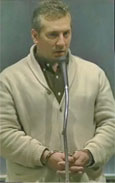
It's hard not to be amused by the group's frequent use of the image of a baleful Mad Dad in plastic handcuffs. He continues to allege in every writing or public comment and on his defense-fund site that he was arrested for trying to prevent his son's indoctrination. In reality, it was for misdemeanor trespass after he had lost his argument, and then had neither the grace nor the manners nor the wit to go home.

Actually, Mad Dad's own words are good ways to illustrate the extreme nature of the authoritative behavior, and perhaps why more reasonable people will not find compromise with this group. Before you get to his site, consider his remarks two years ago when he had a hearing on his trespass charge. The court ordered this volatile fellow to stay away from the school. Our exemplar of authoritative behavior said, "'...my son is very cognizant of the fact that his daddy can't enter school.' A reporter asks the criminally charged dad how he explains this. 'I told him his daddy's in charge. And he smiled.'"

Interestingly enough, daddy wasn't in charge. He has also lost his hearings and trials through U.S. District Court. Someone with less certitude and need to control might see the pattern here. He does not, any more than he would consider that his ideas about parental rights might have flaws.

He goes beyond painting himself and his beliefs positively — very understandable and very human reactions to his failures of control. Through his attorney's pleadings and briefs as well as his own words, he shows the defining characteristic of the group. That is, they make unsupportable and even illogical assertions of rights and other related claims.

Twisting Reality

He is not shy about his demands on his defense-fund site either. As just one example, in framing his arrest and the resulting suit, he writes:
This case is fundamentally about freedom of choice for parents to raise their children in the interest of their well being, health, happiness, growth and development as productive members of society. It is about maintaining parental sovereignty over one's children in private and public spaces - as parents are legally accountable and responsible for their own children. Therefore, this sovereignty should not be undermined by external authorities.
I have no doubt he buys into that. Such parents-rights group members often assert that they are subject to no governmental authority, that no one tells them what to do with their children. Reality differs.

For one, authoritative types seem to favor spanking, paddling and using sticks to punish their children. As Mad Dad did in a recent interview, they like to call his loving correction and swear it is never abusive. While I am not aware that he favors it, some of the same bent also employ Christian Domestic Discipline, which many of us would call wife beating. Yet that site and others like it use the same terms as Mad Dad does for his kids. This is their God-mandated right and duty as family headman. They say they are being pious as well as behaving legally.

Yet in the thousands of cases annually when children are found bruised, bloody and beaten, definitely beyond anyone's definition of loving correction, the government has the power to step in. Parental sovereignty exists only as a concept and in reality has many exceptions.

More mundanely, the big, bad government can dictate that kids must attend school — public, private, or home — through 16. It also requires seat belts in cars and helmets on bicycles for youngsters. There are other laws and regulations mandating keeping children fed, clothed and healthy.

The domestic sovereignty bluster is just that. It is an amusing atavism. It harks to times when slaves, servants and wives were considered too emotional, ignorant and illogical to understand the master's instructions without pain and humiliation — those lesser beings could understand. While slavery exists in pockets here and elsewhere in th world, the days when people could be treated like property are largely gone.

Blinders — Check

A somewhat more subtle assertion that permeated Mad Dad and company's federal suit is the extrapolated right for parents to have total control of any teaching they view as a moral one. They cite the defensible proposition that parents are and should remain the primary providers of moral training for their children. In fact, that's one area where most of us agree and many would agree that a lot of parents do too little here by word or example.

However, up in Lexington, this somehow morphed into parents as the sole providers of moral training by any stretch or association. In addition, the plaintiffs contend that mere mentions of common reality violate their federal rights to teach their kids values.

We heard this most clearly about both the family book and an early reader presented to a second-grade class. It had cartoons of a prince who turned down a parade of potential princess brides, preferring a prince. According to the plaintiffs, this:
  1. (Is) a form of propaganda specifically intended to wipe out their way of life.
  2. (This strikes at) the very, very, very core of their existence.
Oh, another assertion of this group is that because same-sex marriage was created here as a result of a court decision and not a legislative bill, it is not legal. The wingers love that, although anyone who had a middle-school civics class knows the various ways things become legal.

We can stop for a moment to appreciate the position of California Gov. Arnold Schwarzenegger that he'll go with an eight-year-old public preference referendum on this even though his legislature has approved SSM twice. He holds that it's courts that legalize SSM, not that nasty old set of elected representatives.

So, here, SSM is the law of the land. In Lexington as throughout the commonwealth, some families have two married moms or two married dads. Kids run across that regularly, regardless of their parents' fantasies.

Yet the Mad Dad foursome does not think they should provide basic information on daily reality to their children, even if they say clearly they do not approve of SSM and homosexuality. Instead, they demand that the teachers and libraries join them in this conceit.

Fortunately for those who prefer the real world, the U.S. District Court judge eviscerated the plaintiffs' arguments and dismissed the case. He advised them to try again at the state level, that no federal rights were involved here.

Relentless

They did appeal that federal court dismissal, got that hearing before a three-judge panel, and say they'll plea to the U.S. Supreme Court if they lose. I think it is a lock that they'll lose yet again here. District Court Justice Mark Wolf was very specific about their suit's flaws, and the appeal presented nothing new.

Yet another defeat, by three judges instead of one, is not likely to deter this group. They clearly have funding for appeals, through their United Parent of America Inc. In playing the victim, Mad Dad likes to say this effort is expensive and he's fighting it on his own. I would be extremely surprised if they opened their books to show that there were no large donors from outside Massachusetts funding the bulk of this effort.

When they lose this appeal and get turned down by the Supremes, it's likely they'll try again at the state level. There, they have already failed to make the existing parental-notification law much broader. Unfortunately for this group, it is a sensible regulation, requiring opt-out for primarily sexual education curricula. There's really nothing there to empower the alpha male.

The next post will hit on the national efforts for a parents-rights initiative, and a future post will cover battles over controlling library shelves and records of what children check out. The first post in this series is here.

Tags: , , , , , , , , ,

Monday, December 10, 2007

Siren Call of Parents Rights

WE SUPPORT PARENTAL RIGHTS — that looks reasonable on a picket sign or news release. Who are these people and why shall we continue to see...and hear...more of them?

Some key points in this first of a series include:
  • Many very different interest groups use the term for very disparate concepts.
  • Some of these groups have, to use the standard winger term, an agenda.
  • They've been following their strategy and tactics for years and will continue to do so.
  • Many are willing and eager to strip rights from everyone else to create new ones for themselves.
  • They are going to be more and more in our ears and eyes, and courts.

What Do You Mean?

Political activists, particularly those on the right have become very good at creating boffo slogans or at the least hiding their intent behind high-minded and benign-sounding terms. The parents' rights folk haven't coined that catchy slogan, but are real good at the latter.

Who could argue with giving rights to parents to raise their kids? What could be more sensible and fair, eh? Before we feel too warm and approving, let's ask who is using parents or parental rights lingo.

Among the many definitions, each with their own set of organizations, websites and publicity, are new or expanded rights and privileges for:
  • sperm donors to see or have some custody
  • more latitude when investigated by child protective agencies
  • divorced parents' visitation
  • looser home-schooling requirements
  • vouchers and tax breaks for non-public schools
  • accommodations for scholastically advanced students or those who need remedial help
  • access to library records of minor children
  • freedom to use corporal punishment on children (and even wives)
  • grandparents' visitation
  • parent-specified limits on what teachers and even students can discuss in classrooms
  • removal of specified books from school and public libraries

Jack-in-the-Box

Our own most noted local case is was the manufactured one of the Mad Dad, joined by his wife and later another couple from Lexington. It is instructive because they have followed the precise agenda of related groups in other states. We'll surely see more of these situations in many locations. They pop up like a jack-in-the-box.

The Lexington case is a good example for several reasons. First, the groups assert rights they don't have, often claiming such rights predate the concepts of government and laws themselves. Then, they engineer a confrontation. When they lose that, they simultaneously find pliant lawmakers to advance bills for them and bring civil suits claiming their imagined rights were violated. Beyond this, they often have enough sub rosa donations to appeal their court loses, both getting more attention and holding on to the hope of eventual legal victories.

The real aim is to undermine existing shared rights to carve out expanded or new ones in the specific areas they want. It's such that has attracted the watchful eyes of such lefty groups as People for the American Way. Over a decade ago, they published a detailed analysis of 'Parental Rights' Initiatives, which they called The Trojan Horse of the Religious Right Attack on Public Education.

Future posts here will detail some of the legislative and judicial efforts of self-described parents-rights groups. Meanwhile, without being too paranoid about it, I'd note that the Mad Dad types are not just kindly and high-minded parents. They do have an agenda, one that would harm kids and families alike, as well as undermine education and established freedoms.

We aware that their aims are control of shared pubic rights. They are not going away, even after numerous defeats and proof that they are a tiny minority. Unfortunately, the Mad Dad is not unique.

Part two on the attack of the control people is here. An overview of this mini-movement's aims is here. The assaults on ideas and books in schools and libraries is here.

Tags: , , , , , , ,

Friday, December 07, 2007

R.I. Supremes Duck SSM Divorce

Those damned passivist judges strike again! This time it was in Rhode Island, where the Supreme Court told a Massachusetts-married lesbian couple to they couldn't divorce locally.

The three-to-two decision could have gone either way. Oddly enough, the court did not seem as terrified as so many in other states. A big concern has been whether divorcing a legally married SS couple would somehow open the door to recognizing those marriages. The littlest state's AG has already said for various purposes legal marriages elsewhere are okay there, but R.I. does not offer SSM...and apparently not SS divorce.

The best report of the decision was in the Providence Journal here. The 29-page ruling is here, as a PDF file. The Leonard Link analysis is here.

Like so many other rulings in the past couple of years, the court threw the big issues back to the state legislature. In a press release following the ruling, the rationale of the relative inaction was:
The role of the judicial branch is not to make policy, but simply to determine the legislative intent as expressed in the statutes enacted by the General Assembly. In our judgment, when the General Assembly accorded the Family Court the power to grant divorces from ‘the bond of marriage,’ it had in mind only marriages between people of different sexes.
There was the seeming mandatory irony here. The court said SSM was not off-limits. The ruling itself (page 28) included:
We do not mean to suggest, however, that the Family Court is precluded from adjudicating the validity of the marriage if one of the parties allegest the marriage is void or voidable...The parties in this case have not challenged the marriage, and therefore the issue of voidness is not properly before the Court. Moreover, we do not think it proper for the Court, on the state of this record, to attempt to determine whether same-sex marriage is "strongly against the public policy of this jurisdiction.
The dissenting justices noted that the case did not ask recognition of same-sex marriage to be performed by Rhode Island, rather the divorce issue. The couple had a legal Massachusetts marriage and had also then satisfied the residence requirement in Rhode Island to seek a dissolution of the marriage. "The subject matter jurisdiction of the Family Court does not turn on the gender of the parties; rather it turns on their status as a married couple," the dissent held.

The judges used the state statutes and regulations, and then whipped out a dictionary. They concluded that the R.I. codes didn't cover this and ducked it underlying issues. They refer to the General Assembly (legislature) number times in the decision, including the statement (page 16), really a charge, that " But, if there is to be a remedy to this predicament, fashioning such a remedy would fall within the province of the General Assembly.”

Not our job, man!

Tags: , , , ,

God Guy Romney

Brylcreem adI wasn't going to do the Willard Mitt Romney, a.k.a. Cap'n Brylcreem, thing after his religion speech yesterday. I comment only for a major point I don't see getting play.

Cap'n Media Note: Look on his home page in the Mitt TV box. Click the Faith in America link for the pop up of the 6-minute version. The 21-minute one has lots of podium shots and embarrassing spans of former President G.H.W. Bush patronizing the Cap'n, and distancing them.

Many analysts draw comparisons with then Presidential candidate John Kennedy's I'm-an-American-who-happens-to-be-Catholic template. That's fair. Clearly, the Cap'n hoped for the same mollifying effect and stole Kennedy's outline.

For the bulk of the speech, note a huge difference. While both had a primary message of their churches not controlling their public policies, the second big message showed their minds, and Romney's great flaw.

Kennedy spoke forcefully of the desirable and necessary separation of church and state. Romney called for religiosity in public office. Kennedy spoke of a religion-blind America, free of "attitudes of disdain and division" and promoting "the American ideal of brotherhood." In contrast, Romney assumed all Americans were some flavor of Christian, and that this shared religion has a major role in the Presidency. The Cap'n said, "(I)n recent years, the notion of the separation of church and state has been taken by some well beyond its original meaning."

That may play well to conservative Republicans, particularly evangelicals. However, their skeptical view of Mormonism may just as well keep them from supporting Romney anyway.

As is his wont, the Cap'n was too spongy and too slick. Kennedy stood to confront preachers who distrusted Roman Catholicism. Romney went before a handpicked claque. Even there, he did not make strong personal statements. He did nothing to placate the Protestants other than noting that they all had a tie to Christ (even though their ropes lead down different cliffs). That's about as effective as contending Jews and Arabs in the Middle East claim the God of Abraham together.

Nope. The Cap'n is smarmy. He is and remains a salesman. Are you buying...from a God in your politics and government guy?

Tags: , , , , , ,

Thursday, December 06, 2007

Mad Dad Spinning Wheels

A few folk have asked me about yesterday's U.S. District Court Appeals hearing for the two couples in the Lexington kissing kids' book case. The Mad Dad, Mrs. Dad and other couple were tilting at the same windmill from a different angle after already having been knocked down by it.

I confess, I didn't go down to the courthouse this time. They have lost this battle, on very specific legal grounds and:
  1. We can expect the usual federal-court shuffling about and waiting an unspecified time for a decision.
  2. There is no new info or legal basis for them to get this junk in a federal trial now when they already failed.
Fortunately for the housebound and terminally curious, the Metro West Daily folk did not disappoint. The big local dailies didn't bother, but Ian Murphy's piece was in the Lexington edition. The spoiler info is that the three judges gave both sides 10 days to hand over any written material and supplementary briefs they want. Otherwise, the panel doesn't promise when it will rule.

The Mad Dad side has the same attorney and set of allegation and set of claims about why this should be a federal case, as the expression goes. The original jurist, U.S. District Judge Mark Wolf dismissed the case, noting that it did not raise federal issues or violate any of the plaintiffs' federal rights. He was very specific, as well as pointing out that what they wanted was control of the school curriculum and classroom.

Honk. Thanks for playing, but game over.

P.M. Update: Bay Windows got its coverage online too.

For your listening amusement: Two days ago, one day before the hearing, the Mad Dad was on the way-out-there Pundit Review talk show with Gregg Jackson. It's over 20 minutes of alternating bluster and martyrdom.

Tags: , , , , ,

Wednesday, December 05, 2007

Term Limits Podcast.

Click below to play the 13-minute podcast of Boston City Councilor John Tobin speaking about the philosophy and particulars of term limits for his body and the city's mayor. He talks with Ryan Adams and Mike Ball.

The whole 64-minute session is available for download or listening at Left Ahead!


Tags: , , , , , , ,

Remote Control Rightwingers

You don't have to leave your lounge chair to foil those terrible pinkos. You don't even have to get out your down parka to support the Mad Dad, Mrs. Dad, and their like-minded pair of neighbors.

The Massachusetts Family Institute has announced that you can do this today from the comfort of your living room. Their hearing before a three-judge panel in an effort to overturn their loss on customizing the Lexington public school to their religious beliefs takes place today in Boston.

We should note that the Mad Dad/MFI/MassResistance side views this differently. As MFI puts it, this is not controlling curriculum or heading to a private, fundamentalist school, rather:
A long list of major homosexual groups have filed briefs in opposition to the case and have put forward a united front in seeking to stop parents from being the primary moral educators of their children, replacing them with teachers and school administrators, many who have their own agenda regarding homosexual issues.
For the non-agenda-driven fundy of superior rationality and purity of spirit who needs to participate with the least discomfort, they offer:
MFI calls on our supporters to support the Parkers and Wirthlins through prayer. Pray for the two couples and their children, as well as the judges who will hear the arguments. Pray that the lawyers will make the case for parental rights and the judges will understand the real threat to parental authority apparent in the two incidents...Pray on Wednesday wherever you are.
Bend a knee. Change the world.

Tags: , , , ,

Term Limits? Not So Much

Everyone loves the idea of term limits, an idea taht is well on us, right? Well, not really.

In preparing for our Left Ahead! podcast with Boston City Councilor John Tobin, I checked a bit. He's a gutsy guy and he announced that he'd propose them for his body as well as for mayor here.

Among other things I found was that New England in general, and Massachusetts particularly is not so hot on the practice. We are one of a small number of states in the country that does not limit terms for governor. We also have no term limits on legislators. When we did have one from 1990, the Supreme Judicial Court overturned them in 1997. It ruled that the legislature did not have the authority to change part of the constitution on its own.

In addition, only three municipalities have any. Those are:

CityPop.YearLimitedLimitsMethod of
Limitation
% of Vote in Favor% of Vote Opp.# of Votes in Favor# of Votes Opp.
Methuen31,5341993mayor, council3 terms
(2 yr. terms)
charter amend.66.4%33.6%4.1722.109
Provincetown3,5611991council3 terms
(3 yr. terms)
charter amend.town meeting vote, not recordedn/an/an/a
Stow4,0401991all elected and appointed officials3 terms
(3 yr. terms)
charter revisiontown meeting vote, not recordedn/an/an/a


The net has a a lot of such info. The best central location is the source of that chart above, the U.S. Term Limits organization site.

You can contrast that feeble list with New York State's. There, towns as small as 1,300 to New York City limit their leaders' terms.

In Boston, we like our mayor/kings, particularly if they are entertaining rascals like James Michael Curley, who served four terms, including one that saw him spend five months in jail in the middle for mail fraud.

Yesterday, Council Tobin noted how few mayor we had in recent memory. Check a list of the early mayors to see single terms dominating. Later mayors seemed to have figured out it was more than public service, more than an adventure. Many neither advanced nor returned to their previous careers.

The incumbents and their supporters who advance arguments for keeping mayors as long as they get reelected are not terribly convincing. Truth be told, if a 12 or 24-year term mayor led us to increasing glory, safe streets, great school and such, they'd have win the debate. It simply doesn't happen.

Tobin's point was that even respected and beloved mayors and council members get set and stale and even lazy. Look at most of the 20th century till now. Curley was in four terms, with short breaks from 1914 through 1950. Then:
  • 10 years — John Hynes (plus Curley's five months in jail in 1947)
  • 8 years — John Collins
  • 16 years — Kevin White
  • 9 years — Ray Flynn
  • 14 and counting — Tom Menino
Tobin iterated several times that he likes Tom Menino, who is a long-term friend of the family who even took him ice skating when Tobin was a kid. However, he points out that we don't like to turn out incumbent mayors.

Moreover, on the councilor side, he'd like fewer and longer terms. Not the least driver is the constant two-year drill. Like football's two-minute version, councilors know they are up for reelection ever other year. They end up spending far too much time and energy that should go toward their jobs campaigning and fund raising.

It will be fascinating to see how the council and Menino react. If this comes up for public debate, that should be worth the free admission to the session.

Tags: , , , , , , ,

Monday, December 03, 2007

Catch John Tobin Tuesday


Over at Left Ahead!, we're looking forward to talking term limits with Boston City Councilor John Tobin tomorrow. You can listen in live at 2:30 p.m. or catch it later from the same spot. You can also listen to or download it from the Left Ahead! archive.

Congratulatory Note: John and wife Kate had a second son, Daniel, last week. That is the couple in a pic from John's website.

Shortly, John will propose term limits for Councilors and the Mayor. That promises to be the best debate and fight of the Council year.

Many Americans like the idea of limits, at least on those in Congress. There are very few states or municipalities that get past the incumbents' objections. About the only constant in the U.S. is a two-term President.

We'll kick around what you stand to gain and lose by limiting tenures.

As for da Mare, Thomas Menino, the MSM and some bloggers have taken to calling him Mayor for Life. Feel free to remind me that I have already predicted, as in this post, that Tom won't run in 2009. Some others are saying he won't be able to help himself and don't know when to leave a winner.

I'm not sure we'll get to whether Tobin will say he has mayoral aspirations. Already though, David Bernstein over at the Phoenix is handicapping him as number three on the list. That article includes:
Another pol who’s not shy about his mayoral ambition, Tobin starts with a strong base in one of the highest-voting districts in the city, centered on the West Roxbury Parkway. Good-looking and likable, Tobin is a natural on the stump, and has allies throughout city political circles. But he’s far from a household name, and doesn’t seem to have a single issue or trait to distinguish himself in people’s minds. If he uses the coming year to stand out on an issue on which Menino is thought to have failed— such as education or housing — he could be a formidable candidate, say several sources.
John's a straight talker. This should be good.


Tags: , , , , , , , ,

Shielding Kids from the Real World

Bobbie Bubbles by E. Hugh Sherwood and Maud Budlong
I try to make my three kids savvy enough to judge any idea or expression by themselves...and to love learning life long. This is not a universal attitude in Massachusetts or this country.

There are newspapers, TV and many other MSM and other sources of news. Even more available and intrusive can be acquaintances, items on the internet, and events we witness.

Short of blinders and bubbles — and isolated fundamentalist religious schools — it is madness to suppose you can shield your children from even local reality.

As my beloved Greek professor Ruby Ott commented one day, she would never open a Reader's Digest condensed book. As she put it, "I don't want people chewing my food before I do." Yet, to me that certainly appears to be what the desperate parents who would shield their kids from ideas are about.

Clearly, this is a sweeping-the-sand off the beach effort. Yet the range of book selectors, book banners, book bowdlerizers and flat out censors seem to want to do. Some ideas seem too powerful and too destructive for their kids to know. How very sad.

Their oft repeated argument is that children at 6 or 12 or even 18 are too impressionable even to be exposed to various ideas or expressions of ideas. We likely can all agree that hard-core drug lit and S&M pix are not kids' library fare. On the other hand, the asininity of conflating those with mentions of civil unions or same-sex marriage, which are legal in many places, is unrealistic at best. Even worse is when someone wants to determine for everyone what books can be on library shelves and what topics all can hear, or not, in schools.

Another aspect is the two-angled volley of parental responsibility. The bibliophobics hold that they are being responsible parents by trying to control what books their children see in schools or libraries and what ideas they hear. Folks like me, and likely most progressives and libertarians, can find it the basest abrogation of parental responsibility for mom and dad not to prepare their kids to evaluate, assimilate or reject the many thousands of ideas they will read and hear. The world is too much with us to do otherwise.

I don't want my kids to be stunned into stupid thoughts or actions if confronted with realities they should have know about a decade or more before they confront them. Regardless of our protective fantasies, life not only goes on, but it comes to the door, into our ears, and before our eyes.

I wonder what happens to a child in an artificial book bubble when reality appears. Are they terrified, delighted, confused?

The analogy to obsession with germs leaps to mind. Sensible protection can easily become neurosis or worse, particularly when couple with the need to control. As with so many of these seemingly political arguments, the underlying issue of who's in charge brooks no compromise.

A future post or two will deal with public-library issues in Massachusetts, Wisconsin and elsewhere. The triggers for this were there heroic stance of a librarian and her board, and comments related to it.

The comments relate to an organization that believes its members have the right and the duty to control what books are available, particularly for kids. Researching this let into a netherworld of such groups. There positions are like those of MassResistance and the Mad Dad. Those of us who strongly advocate free thought and free speech don't appear to have any middle ground with these folk.

You say shield. I say bubble.

Tags: , , , , , , , ,

More Larry Craig Friends Talking

Just in case you missed your copy of the Idaho Statesman yesterday morning, Larry Craig has a new reason to be shocked, simply shocked that any man (make that multiple men) claims to have had sex with him. The august and honorable U.S. Senator from Idaho told everyone but the Statesman that "Like its previous coverage, these latest allegations are completely false and have no basis in reality."

A whole new set of men provided details of their encounters with the most assuredly noble, honest and not gay and never been gay Senator.

By coincidence, today's Boston Globe has a lightly amusing piece on Craig by a novelist. It notes in passing that numerous straight adulterers have gotten a much easier ride after their sex acts became known. I think too of comments from gay friends about how difficult it can be for straight-identified men who have homosexual sex to cope.

Nonetheless, perhaps the best takeaways here are oldies. I bet Craig's parents told him to be honest and to correct his blunders. He's done neither and he denies what an Idaho politician friend of mine told me was common knowledge for decades.

On the cynical side, the right and proven PR angle is to admit the problem and do what you can to fix it. This could even have been a Jimmy Carter adultery-in-my-heart moment when he admitted to his needs and was seen as a lusty guy. That too would have been liberating for gay men in general and for those straight-ID guys in particular.

Instead, his voters and we know him as a liar and a coward. That's not pretty, but we can sure he'll never be a model for honesty nor one for gay liberation.

Each of us likely wants to think that adversity will prove our superior inner selves and strength. May we all do better and be better than little Larry.

Tags: , , , ,

Saturday, December 01, 2007

Librarians for Freedom, Again

In the place where bears feed, Macungie, Pennsylvania, librarians again seem to have a clearer sense of what it should mean to be an American in a republic than some citizens. Some bluenoses and likely homophobics there figured they could dictate what all kids and all parents could check out of the public library.

Bear note: The art is off the town logo.

Amusingly enough, they zoomed in on the same book that so disgruntled our own Mad Dad in Lexington. They demanded that King & King, the early reader book that has a cartoon prince bypassing a parade of princess potential brides in favor of another prince.

In Lexington, it should have been fine and was for the vast majority of parents and children. After all, same-sex marriage is the law of the land in Massachusetts, civil unions are commonplace elsewhere, and the Lexington schools have numerous families headed by same-sex couples.

In the suburb of Allentown, Pennsylvania, some parents can pretend that they don't even want their kids exposed to such real-world relationships. That's their business, until they decide they will cleanse the pubic libraries to support their private belief system.

A detailed article in the (Allentown) Morning Call described how more courageous and freedom-minded librarians put their feet down. We should all be aware that this has become a common occurrence in this country. Librarians have told bullies as high as Homeland Security snoopers where the lines to free speech and privacy are. They are a gutsy bunch, it would seem.

Lower Macungie Library Directory Kathee Rhode puts it, "'That's what a public library does, and you make the choice. We certainly want parents to make that decision for their children — not one parent making that decision for all children.''

She and the library's board report that an American Library Association attorney told them "that removing a book because of its subject matter could be considered unconstitutional based on case law and could open the library up to a lawsuit."

The book has been in the library for two years, being checked out about once a month. Parents Eileen and Jeff Issa were shocked, shocked, when they saw it. As she said, "I saw them at the altar and I said, 'This can't be what I'm thinking.' I was sick."

The pair demanded that the library remove the book from circulation. They claim to have gathered 40 signatures in support. The library board denied the demand twice and were backed up the township supervisors, who refused to overrule the decision.

As one measure of the librarians' integrity, the supervisors appoint their board and control the budget. In Lower Macungie, as in Lexington, First Amendment rights are not subject to the fiats of the few.

Tags: , , , , , , , ,

Seniors in the Library with the Wine Bottle

Get a Clue® (registered trademark of Hasbro, Inc.)! If you are not in the habit of Harrumph!, over there, you'll find non-political Bostoniana, including:

Tags: , , , , ,

Friday, November 30, 2007

Still Mad Dad

Thanks to Bud over at MassResistance Watch, I don't have to detail the droning, quixotic appeal of Lexington's Mad Dad. His post today covers the effort.

If you don't want to bother, the gist is that they tried locally to customize curriculum down to the topic level. They got rejected in state and federal courts. Now they are appealing the federal rejection. Yawn.

Tags: , , , ,

Thursday, November 29, 2007

Beating Butts Brings Out Beast

After posting on how the bill to classify spanking of children as abuse intends to catalyze discussion, I checked Technorati, Google, and Yahoo to see what the MSM and bloggers were saying for the past week or so.

Well, it looks like the author of that bill will get that discussion going. She said she doesn't expect the bill to pass, but does want people talking. That's happened.

Online Passions

By the bye, if you want to get your own sense, search technorati.com for spanking and massachusetts. I got 601 hits this morning. The default returns by date, so you get the freshest in every sense of the word. Adding the state helps filter out the S&M folk.

You can find your own links. I won't prejudice it with those to the many pro-spanking or the anti-spanking ones. Suffice it to say that the libertarian and atavistic attitudes here strongly prevail. Think, "Nobody can tell me what I can do to my kids!" and arguments about children being so irrational that only hitting them will keep them alive and those around them physically safe.

Reading the MSM and blogger entries makes me less open minded about this than even one day ago. I raised and am raising three boys without spanking or otherwise hitting them. Yet the responses from the pro-spanking folk ring hollow and worse. They might turn me into a strong no-spanking sort.

All Kinds of Rights

To the crux of the intrusive-government issue, I must quickly note that it is a fantasy that the state can't tell parents how to raise their kids. We have such agencies as the Department of Social Services, there are laws and regulations about how children must be educated and for how long and when and under what conditions they can work, and specifically for violence, the laws and regulations forbid serious injury, sexual abuse and much more. Spanking is on a spectrum and is not stand-alone.

What is far more disturbing is the children-as-property attitude in so many articles and posts. The dozens I read completely are an amazing throwback, and not in a good way.

Even Wikipedia has a complete piece on spanking with a lot of balance and many links. Parents who want to hit their kids at will can't find the medical and psychiatric support for doing so though. Research points the other way and is past the very old-fashioned view that irrational developing children understand pain as correction, making beatings necessary.

Reading the justifications suggests to me that MDs and shrinks are ahead of parents. Face it; nearly all of us start parenting the way we were parented. (If you came from an extremely dysfunctional home, you make break the cycle.) We feed and dress and school our kids by what we know. Most of us think what our parents did was pretty damn good — don't we think we're wonderful?

Property and Primitives

Instead, reading about the necessity of punishing kids physically brought up too many historical parallels.

Of course, kids do need to learn self-control as they grow. It is not at all convincing that showing them that angry violence is a solution to interpersonal conflicts and unmet expectations will help them do so. Instead, word and example are the proven methods. These require more of mind, patience and emotion from the parents. They also hold the peril of passivity.

Many of the pro-spankers set up a straw man here. You are either a caring parent who uses corporal punishment to teach and show love or you are a namby-pamby who tries to be a friend to your kids and turns out self-centered undisciplined sociopaths. Quadruple ha-ha on such illogic.

Too many of the pro-spanking articles and posts read like infamous justifications for abuse of wives, servants and slaves. The masters were often wont to speak and write in previous centuries about the necessity for beatings. The wives/servants/slaves were hysterical or primitive and only understood the switch or whip.

Kids aren't exactly the same, but close enough for me. Reading all that bluster about the necessity of having to show these undeveloped beings how to behave with physical punishment hardened me to such arguments.

I'll keep tabs on this. I hope that the discussion continues. Perhaps I'll run across a cogent line of thought justifying spanking as a way to teach social behavior...eventually. The literature and my small universe of three well behaved sons who learned without being hit strongly say otherwise to me.

At the same time, having three children has given me some empathy with spankers. Children can be annoying and infuriating. It would be expedient, quicker and easier, to hit them rather than deal more maturely and more rationally. Besides, in the main, parents are bigger and stronger. We can slap, spank and beat our kids.

House Bill 3922 classifying spanking as a civil offense in Massachusetts will not become a law. However, introducing it seems to have done what the author intended. We're talking.

Chatter Pointer: Writing of, there's local commentary over at UniversalHub.

Tags: , , , , , ,

Wednesday, November 28, 2007

A Beating? Let's Talk About It.

The manufactured dust-up about an anti-spanking law here has strongly polarized folk nationwide. It remains to be seen whether as this House Bill 3922 gets a debate in committee and perhaps on the floor of either chamber it will cause the discussion that its author wants.

It had its hearing today before the Joint Committee on Children, Families and Persons with Disabilities. It is unlikely to reach the legislature for a vote and certain not to become a civil law. Neither the author, Arlington psychiatric nurse Kathleen Wolf nor the sponsor, her State Rep, Jay Kaufman, expects this to become law. However, Wolf would very much like it to be the basis for public discussion.

As such, Wolf manufactured the fight. Kaufman might have finessed this, but it is his obligation to advance any bill suggested by a registered voter in his district, once it is in shape to go.

H3922 would not criminalize spanking, although it would classify it as abuse as intended to cause pain and humiliate — exactly what nearly all children's butt beaters intend. We already have a Department of Social Services to step in as necessary and laws that in theory hold parents responsible for maiming or killing their kids when the parents lose it. Pretending this bill is some sudden novel plot against parents' rights is disingenuous.

The other side has lost no time in manufacturing its debate on this, rising to Wolf's bait. Predictable among the responses are:
  • This is nanny state, liberals gone wild and proof we need less, not more, government.
  • Both conservative sorts as well as MSM don't bother to distinguish between such civil legislation (penalty is notifying the Department of Social Services to evaluate) and criminal law. They portray this as a SWAT team kicking in a house door to arrest a perfectly normal dad for spanking his wild child.

My Very Own Bottom

I have three children whom I have never spanked. I well understand the impulse; kids can be damned trying. In fact, a few days after the birth of our first, I began to get a sense of that. He did not sleep more than a few hours at a time for the first six months. We were exhausted and often short-tempered. I used to half-joke with my wife as I staggered with him from crib to her breast how clever nature was to make babies cute. When he smiled to see me and reached out to get picked up, my fatigue and anger vanished.

My own background is worth a mention. My mother had grown up with her strict, country mom hitting her with a paddle, belt or switch. When my sister and were very young and part of the Occupation Army in Japan, the maids did not hit us any more than they would have hit their own children. Their society did not work that way.

When we returned to the States, my parents divorced and my mother raised us, while working full time. My sister and I shared a bedroom and would talk after being told repeatedly to let our mother sleep. She tells the story of spanking me one of those times, when I was five. She said I was just lying there and she asked if it hurt me. I told her not really. She said it did hurt her hand and wrist, so she stopped and never spanked us again. We got lectures and restrictions but no corporal punishments.

That is my approach. It requires more wit and maturity than beating a smaller, defenseless person.

Likewise, I have friends who were abused in the name of punishment and training, often with skin-breaking belt beatings. They also responded by not ever hitting their children — no matter how justified it might seem at a moment of pubescent sass.

On the other hand, I know people who spanked their kids and some who also spank their grandkids. Invariably if the subject comes up, they'll say something like, "Well, I regularly got my butt beat and it didn't hurt me!"

Another way to look at that background and its result might be, "Well, yes it did. It turned you into a child abuser." Therein lies the crux of Wolf's debate.

Two Views in One Paper

Two disparate and telling views appeared in the Boston Herald. As you might imagine, their editorial played the Big Brother angle. However, columnist Peter Gelzinis wrote to the underlying issues.

The editorial included, "The bill is wholly unnecessary for more than the obvious reason - which would be the government regulation of parenting. Would the Spanking Police have a right to storm the front door if they hear that Dad gave Junior a swat for playing in traffic?"

Gelzinis, on a less emotional tone got a good quote from Kaufman:
I am keenly aware that bills are very dull instruments when it comes to trying to legislate good behavior. But what I’m grateful for with this is the chance to engage the public in a conversation on the troubling, almost epidemic rise, in the number of child abuse cases we see each year. It has simply become unacceptable, and if a bill like this can shed some more light on the issue, then the effort is worth it.
The columnist then added:
But then, when it comes to spanking, every parent is convinced they know how to do it just right, and it’s none of anybody else’s damn business - least of all the state. Problem is, DAs across the state this year charged about 5,000 people with not knowing where discipline ended and abuse began.
This bill is getting lots of coverage in the MSM as well as winger blogs and commentators. We don't have to wait for a Rush Limbaugh to take his turn, our local Hub Politics jumped right in with its ridicule and conclusion:
And where does it end? Will parents no longer be able to enforce their own curfews, deny their kids privileges based on their performance in school... Will the state start regulating how much parents can give their kids for an allowance?

Are we going to sit on our hands and let the state tell us how to raise our kids?
I must say that is very well put and clearly states the kids-as-property view in the guise of parents' rights. It leads to an equally precise response.

Sitting on your hands may work. If you are frustrated and feel out of control, rather than take a belt or paddle to your kid, sit on your hands! More humane and rational alternatives will come to you long before the DSS knocks on your door.

Next Day Update: Mass Family Institute testified against 3922. Director of Public Policy Evelyn T. Reilly actually seemed to reinforce Gelzinis' argument. She very carefully parsed the ideal situation — one likely out of reach of a parent acting in anger:
If administered carefully, with love and an explanation, many such children eventually express relief that there is someone in charge that they can rely on to guide them and show them right from wrong. Many children need to know that there is someone in charge who is even willing if necessary, though reluctantly, to judiciously administer a non-injurious spanking.

Tags: , , , , , , , ,